















Those arriving in Rio de Janeiro for the first time usually have the same question: which airport should I choose and how do I leave it safely and efficiently? Over years of assisting domestic and international travelers, the Brasil ATM team has identified a clear pattern: many arrival issues in the city stem from a lack of information about the airports of Rio de Janeiro.
Rio has two main airports, with very different purposes, strategic locations, and direct impacts on travel time, costs, and even the overall experience. Understanding this logic before boarding helps avoid last-minute decisions, unnecessary long commutes, and higher-than-expected expenses.
This guide was designed to be definitive and practical. Here you’ll find clear comparisons, objective tables, step-by-step guidance, and direct answers to the most common questions—ideal for those who want to decide quickly, safely, and without confusion.
What are the airports of Rio de Janeiro?
Rio de Janeiro has two main commercial airports:
- Galeão International Airport (GIG)
- Santos Dumont Airport (SDU)
Each one serves different flight profiles, passenger types, and needs. There is no absolute “best airport”—there is the one that best fits your itinerary.
Galeão International Airport (GIG) – when it makes the most sense
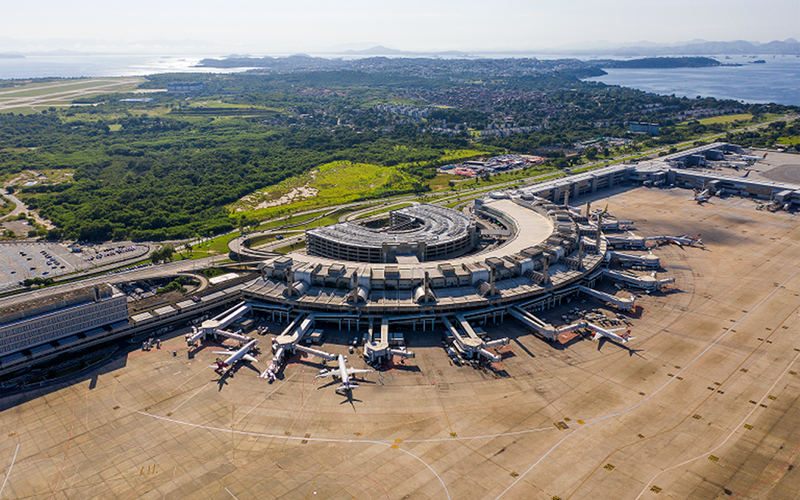
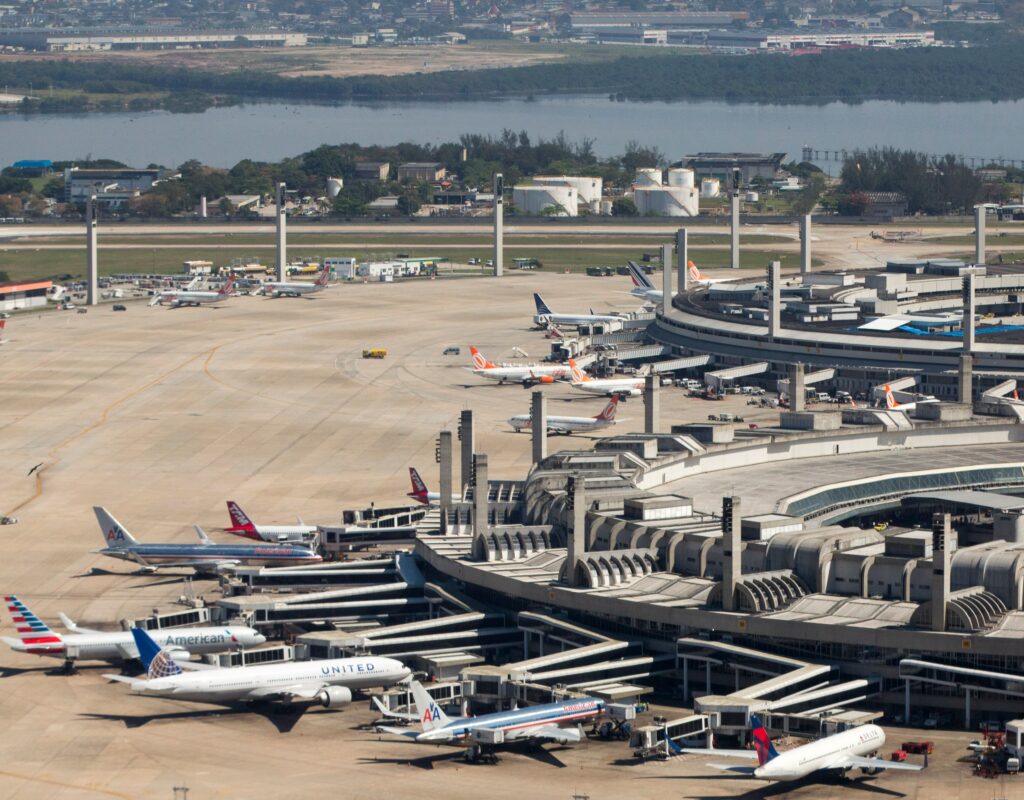
Galeão International Airport, officially named Tom Jobim, is the main international hub of the state of Rio de Janeiro. It handles most international flights and also operates medium- and long-haul domestic routes.
Galeão location
Area: Ilha do Governador
Average distance:
- Copacabana / Ipanema: ~20 to 25 km
- Downtown Rio: ~15 km
- Barra da Tijuca: ~30 km
Location directly affects travel time and transportation costs, especially during peak hours.
When to choose Galeão
Galeão is usually the best option when:
- The flight is international
- Ticket prices are significantly cheaper
- Your final destination is not immediately in Downtown or the South Zone
- Arrival time is late at night or outside peak traffic hours
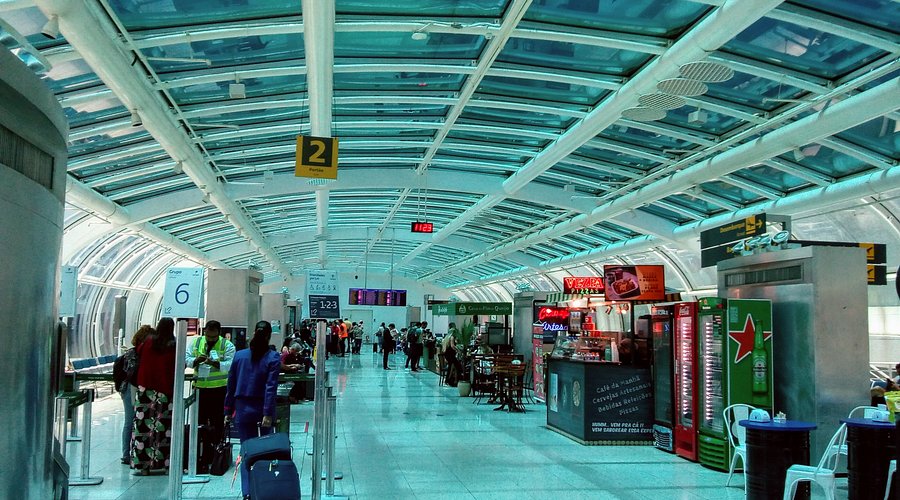
Infrastructure and services
Galeão offers a broad infrastructure, including:
- Modern terminals (T2 is the main one)
- Full food courts
- Currency exchange, cash machines, and 24h ATMs
- Duty-free shops
- Car rental services
- Free Wi-Fi
Despite the solid structure, the airport’s size requires internal time planning, especially for connections.
Santos Dumont Airport (SDU): speed and strategic location

Santos Dumont is an airport focused on domestic flights, especially the Rio–São Paulo air bridge and regional routes. It is known for its convenience and iconic views during takeoff and landing.
Santos Dumont location
Area: Downtown Rio de Janeiro
Average distance:
- Downtown: 5 minutes
- Copacabana / Ipanema: ~10 km
- Barra da Tijuca: ~25 km
Its location is one of SDU’s biggest advantages.
When to choose Santos Dumont
Santos Dumont is ideal when:
- The flight is domestic
- Your final destination is Downtown, the South Zone, or the port area
- You want to minimize travel time
- The trip is short or business-related
Infrastructure and services
Because it is smaller, Santos Dumont offers:
- Fast check-in
- Short time between landing and exit
- Essential restaurants and cafés
- ATMs and basic services
The experience is usually more agile, with less internal walking.
Direct comparison: Galeão x Santos Dumont
| Criteria | Galeão (GIG) | Santos Dumont (SDU) |
| Flight type | International and domestic | Domestic |
| Location | Ilha do Governador | Downtown |
| Time to Copacabana | 40–70 min | 20–35 min |
| Infrastructure | Large and complete | Compact and practical |
| Best for | Long trips | Short trips |
| Average transport cost | Higher | Lower |
How to leave the airports of Rio de Janeiro
One of the biggest doubts upon arrival is how to leave the airport safely and at a controlled cost. Transportation choices vary significantly between GIG and SDU.
Transportation at Galeão
Main options:
- Uber / ride-hailing apps
- Comfortable
- Variable pricing by time
- Can be affected by heavy traffic
- Licensed taxis
- Fixed price by zone
- More predictable
- Executive bus (Frescão)
- More economical
- Routes to the South Zone and Barra
- Less flexible
- Car rental
- Works well if you’ll continue traveling
- Not very practical for the South Zone
Transportation at Santos Dumont
- VLT (Light Rail)
- Connects to the metro and bus terminal
- Very economical
- Uber / taxi
- Short routes
- Excellent cost-benefit
- City buses
- Works well for Downtown and the South Zone
Step by step: how to choose the right airport in Rio
- Check whether your flight is domestic or international
- Evaluate the neighborhood where you’ll be staying
- Compare airfare price vs. transportation cost
- Consider arrival time and traffic conditions
- Prioritize convenience if the price difference is small
This simple logic prevents poor decisions and saves time and money.
Safety at the airports of Rio de Janeiro
Airports are monitored and generally safe, but a few best practices make a difference:
- Avoid informal transportation offers
- Prefer apps or licensed taxis
- Use ATMs located inside the airport
- Avoid handling large amounts of cash in outdoor areas
- Plan transportation before landing
Conclusion: understanding Rio’s airports changes your travel experience

Choosing wisely between the airports of Rio de Janeiro is not a minor detail—it’s a decision that affects time, cost, comfort, and safety from the very first minute in the city. When travelers understand the difference between Galeão and Santos Dumont, arrival stops being stressful and becomes just another well-planned part of the journey.
Simple planning leads to lighter, more efficient, and more enjoyable trips.
Want to keep organizing your arrival in Rio safely and efficiently? Explore other complete guides from Brasil ATM and learn how to get around, withdraw cash, and avoid common mistakes in your first days in the city.
Where to withdraw cash from ATM24h in Brazil
To make the most of your Rio de Janeiro itinerary, carrying cash is a good idea. It ensures a smooth and hassle-free experience. In some places, cash is essential for food, transportation, attraction tickets, and more.
Check out the table below for 24-hour ATMs in the locations mentioned in this article:
| Where | Location |
| Aeroporto Internacional do Galeão | View locations here |
| Aeroporto Santos Dumont | View locations here |
| MetrôRio | View locations here |
| Sheraton Rio & Resort | View locations here |
| Ipanema Beach Hostel | View locations here |
Discover Brasil ATM (At The Moment)
At Brasil ATM, we see Brazil as a place full of unique beauty and fascinating culture. Our portal, supported by the global ATM24h brand, reflects our love for Brazil. We aim to inspire tourists to explore its wonders safely and informed.
We provide accurate, updated, and inspiring information in three languages. With us, you’ll have everything you need to plan your trip with confidence. We offer travel guides, detailed itineraries, and helpful planning tips.
We want to create memories that last. We’ll show you the natural and cultural beauty of Brazil. Explore famous destinations like Rio de Janeiro and São Paulo, and discover hidden gems like Lençóis Maranhenses and Fernando de Noronha. We’re here to help you make the most of your trip.

You may also like about Rio de Janeiro:
- Public transportation in Rio de Janeiro: how it works, how much it costs, and how to use it safely
- How to Get Around Rio de Janeiro – Practical tips to get around safely and efficiently
- What to Do in Rio de Janeiro – Must-See Attractions to Make the Most of the City
- How to withdraw money in Rio de Janeiro – Best practices to avoid fees and risks
Frequently asked questions
The airports of Rio de Janeiro are Galeão International Airport (GIG) and Santos Dumont Airport (SDU). Galeão serves international and domestic flights, while Santos Dumont focuses on domestic and short routes. To plan your arrival without mistakes, check the complete guides from Brasil ATM.
The choice depends on the type of flight and your destination area. International flights usually use Galeão; domestic flights and stays in Downtown or the South Zone favor Santos Dumont. See practical comparisons and make confident decisions with Brasil ATM.
Use Uber, licensed taxis, or official public transportation, avoiding informal options. At Galeão, plan your route in advance; at Santos Dumont, the VLT and apps are quick solutions. Check the best routes and updated tips with Brasil ATM.
Santos Dumont is the closest, with an average travel time of 20 to 35 minutes. From Galeão, the trip usually takes 40 to 70 minutes, depending on traffic. Learn how to save time and money with Brasil ATM.