









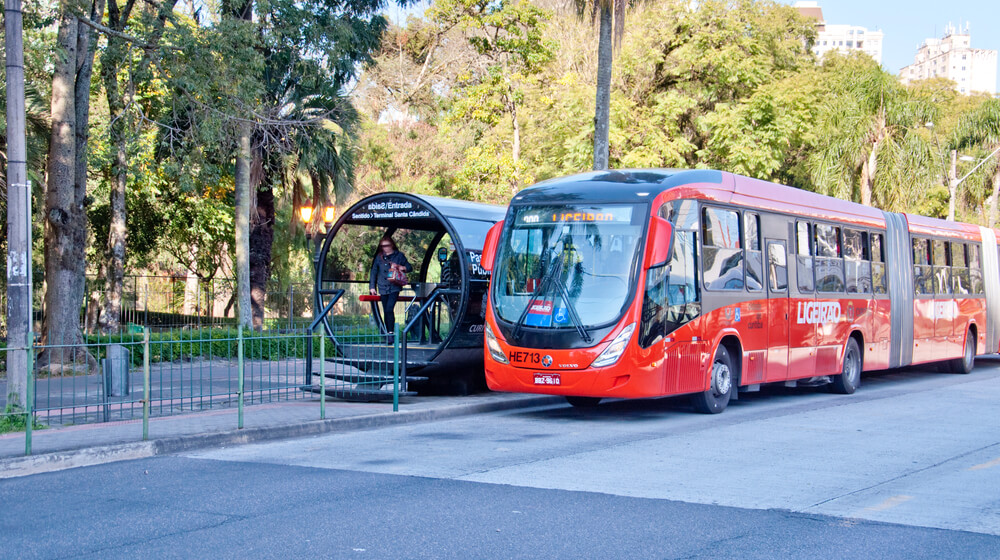
Public transport in Curitiba is considered a world reference in urban mobility, with bi-articulated buses, tube stations, and integration between lines. The system is operated by URBS and covers the entire city. For tourists, it is a practical and economical option to visit the main tourist spots without depending on taxis or apps.
Are you planning a trip to Curitiba and want to understand how public transport works, without depending on a taxi or app for every trip? The city has one of the most recognized urban mobility systems in the world, with integrated buses, accessible stations, and routes that pass through the main tourist spots.
URBS, the municipal authority responsible for planning and supervising public transport, manages the system. It covers virtually every neighborhood in the city and offers efficient connections between downtown and outlying areas. For those visiting Curitiba, using the bus is a choice that combines economy and practicality.
The editorial team at Brasil ATM researched the functioning of the Curitiba transport system with a focus on the traveler: routes, payment methods, types of buses, accessibility, and the main questions of those arriving in the city for the first time. By the end of reading, you will know how to get around safely and plan your itinerary with more autonomy.
Public transport in Curitiba: everything the tourist needs to know
The Curitiba bus system is safe, integrated, and covers the city’s main tourist attractions, with good frequency and affordable cost. For those visiting, it is one of the most practical ways to get around.
Curitiba has one of the most planned collective urban transport systems in Brazil. The city became known worldwide for its model of exclusive bus lanes and the design of the tube stations, which speed up boarding and improve passenger flow.
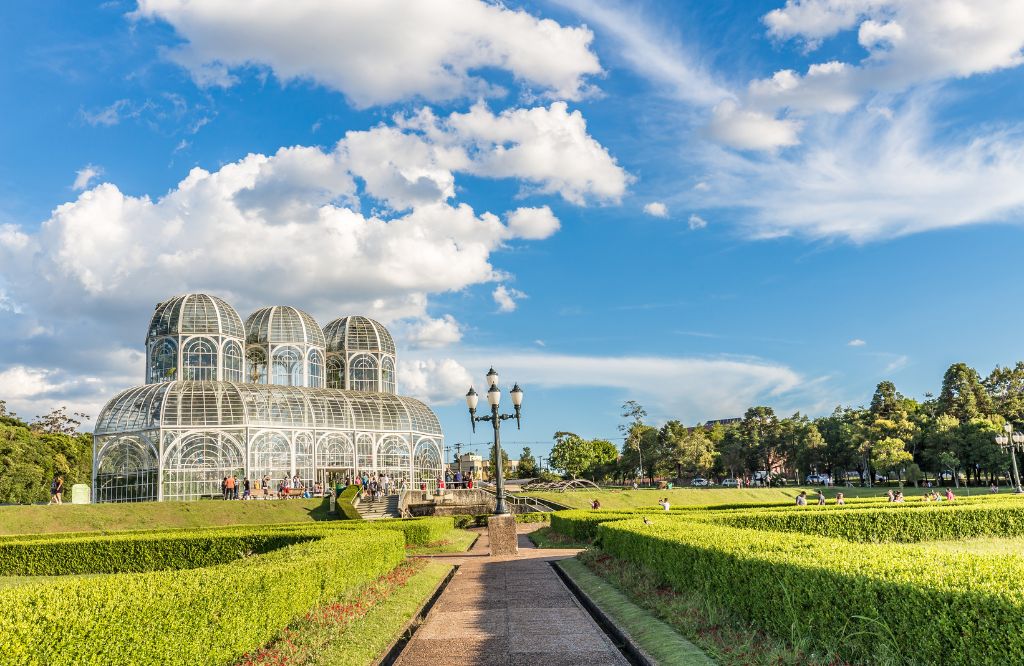
For the tourist, the system has concrete advantages: the main attractions, such as the Botanical Garden, the Oscar Niemeyer Museum, and Barigui Park, are served by regular bus lines. The flat fare allows you to transfer between different lines with a single ticket within the integration period, which represents real savings in the travel budget.
The most common limitation reported by visitors is the initial learning curve: understanding the types of lines, the tube stations, and how the transport card works can take a few minutes. With the right information, however, the system becomes quite intuitive.
What are the main bus lines for those visiting the city?
For tourists, the lines of greatest interest are the Tourism Line and those that pass through parks and museums. There are also express and inter-neighborhood lines that connect the main terminals.
The Tourism Line is the most recommended option for those who want to see the tourist spots without having to change buses several times. The vehicle makes a circuit through the city’s main attractions, with the possibility of boarding and disembarking at different stops. The service operates on weekends and holidays, with specific times.
In addition to the Tourism Line, the express lines (identified by the color red) and the inter-neighborhood lines (orange color) are the most useful for moving between regions. To get to the Botanical Garden, Tanguá Park, or the Wire Opera House, there are regular lines that depart from the central terminals.
The complete and updated itineraries are available on the URBS app and the official website. We recommend checking the routes before leaving the hotel, especially for attractions that are outside the center.
How the Curitiba urban bus system works
The collective transport of Curitiba operates based on a hierarchy of lines that complement each other, forming an integrated network. The model was developed starting in the 1970s and served as a reference for cities in several countries.
According to URBS, the system transports about 1.3 million passengers per day, distributed in more than 250 lines that cover the entire urban mesh of the municipality and part of the metropolitan region.
The Trunk-Feeder model: why Curitiba is a world reference in urban mobility
The Trunk-Feeder model is the foundation of the Curitiba bus system. In it, the structural lines (the trunks) transport passengers along the city’s main roads, while the feeder lines connect the neighborhoods and integration terminals.
This design allows the passenger to get from any neighborhood to the center, or from one neighborhood to another, paying a single fare, as long as the transfer is made within the period. For the tourist, this means that it is possible to circulate through much of the city with a fixed and predictable cost.
The integrated urban project, developed by architect Jaime Lerner when he was mayor of Curitiba, received recognition from the United Nations Environment Programme (UNEP) as one of the most sustainable urban transport models in the world.
What are the types of buses that circulate in Curitiba?
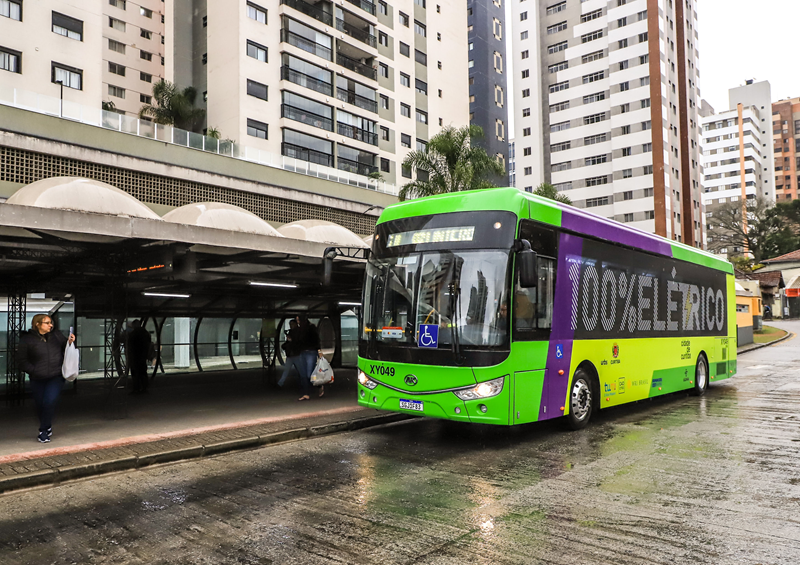
The system has different categories of buses, identified by colors, which indicate the type of route and the level of service offered.
| Type | Color | Main Function |
|---|---|---|
| Express | Red | Connects terminals to the center, with stops at tube stations |
| Inter-neighborhood | Orange | Connects neighborhoods and terminals without passing through the center |
| Feeder | Green | Makes the connection between neighborhoods and terminals |
| Direct (Ligeirinho) | Silver/Gray | High-frequency lines on expressways |
| Tourism Line | Dark Blue | Circuit through the main tourist spots |
| Conventional | Yellow | Serves local routes and more distant neighborhoods |
The color distinction facilitates identification at the stop, even for those who do not know the itineraries well. The express lines and the “ligeirinhos” have higher frequency during peak hours, which makes them the most reliable for the tourist who depends on punctuality.
Integrated transport network: how integration between lines works
Fare integration allows the passenger to use more than one line paying only one fare, as long as the transfer is made within the integration terminals or tube stations and within the period established by the system.
There are more than 20 integration terminals spread across the city, in addition to dozens of tube stations along the express corridors. Upon entering any of these points with a validated Transport Card, the passenger can take a bus from another line at no additional cost within the integration period.
For the visitor, this means that it is possible, for example, to leave a terminal near the hotel, arrive at the historic center, and continue to a park on a third line, all with a single ticket. The key is to always perform the transfers at the indicated terminals or stations, never at common stops.
Curitiba Transport Card: how to acquire and recharge
The Transport Card is the official means of payment for the Curitiba bus system. It replaces cash payment and is necessary to use the fare integration between lines.
Does the tourist need a Transport Card or can they pay in cash?
It depends on the type of bus. On conventional lines and some specific itineraries, it is possible to pay in cash to the conductor. In tube stations and on express buses with pre-paid boarding, the card is mandatory.
Cash payment is still accepted on part of the conventional lines, but the amount charged may be different from that recorded on the card, in addition to not guaranteeing integration between lines. To take advantage of the integrated fare benefit and have more practicality, the ideal is to acquire the Transport Card in the first days of the visit.
Tourists staying a few days in the city can evaluate if the cost of acquiring the card is worth it in relation to the number of planned trips. If the itinerary is short and concentrated in the center, app taxis can be a more practical alternative for certain trips.
Where to buy and recharge the transport card in the city
The Transport Card can be purchased at URBS stores (Rua Marechal Deodoro and in the main integration terminals), in accredited lottery shops, and in some partner establishments. Issuance has a fixed cost that may vary; check the updated value on the official URBS website before going.
Recharging can be done at the same points of sale, in addition to self-service terminals installed in stations and on the official app. The balance is credited in real time in most cases.
For tourists arriving from outside the country, it is necessary to present a valid identification document at the time of issuance. The card has no defined validity and can be used on future visits.
Schedules, itineraries, and real-time information in Curitiba transport
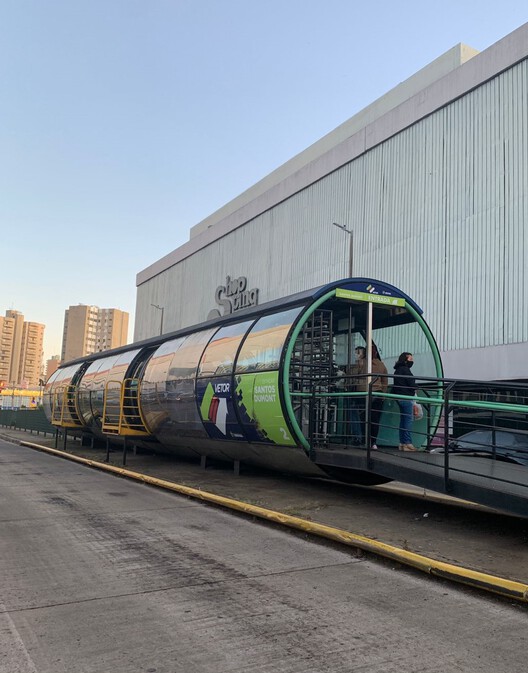
The passenger information system in Curitiba is one of the most complete among Brazilian cities, with digital and physical channels that facilitate the planning of the trip before and during the journey.
How to consult bus schedules and routes in Curitiba?
Schedules and itineraries are available on the official URBS app, the autarchy’s website, and on Google Maps, which integrates Curitiba public transport data in real time.
The URBS app allows searching for lines by number, destination, or boarding point, in addition to showing the predicted arrival of buses in real time. For the tourist, it is the most practical tool, as it works without the need to previously know the line numbers.
Google Maps also incorporates the system’s data and indicates routes with transfers, waiting time, and departure times. It is a good option for those who already use the app in their daily lives and prefer not to install a new program on their phone.
Schedules may vary between weekdays, Saturdays, and Sundays, with reduced frequency on holidays. We recommend checking the schedules the day before to avoid unnecessary waits, especially for attractions that are in less central regions.
Informative sound system in stations: how the accessibility service works
The tube stations of Curitiba have a sound information system that announces the lines, destinations, and next stops. The feature was developed mainly to serve people with visual impairments, but benefits any passenger who is not familiar with the system.
In addition to the sound, the stations have informative panels with the itineraries of the lines that serve that point. Some busier stations have digital monitors that show the predicted arrival of buses in real time.
This set of features makes the system more accessible for foreign tourists and for people visiting the city for the first time, reducing dependence on prior knowledge about itineraries.
Metro and railways in Curitiba: what exists and what is planned
Rail transport in Curitiba is a topic that generates frequent doubts among visitors, especially for those used to cities that have a consolidated metro.
Does Curitiba have a metro?
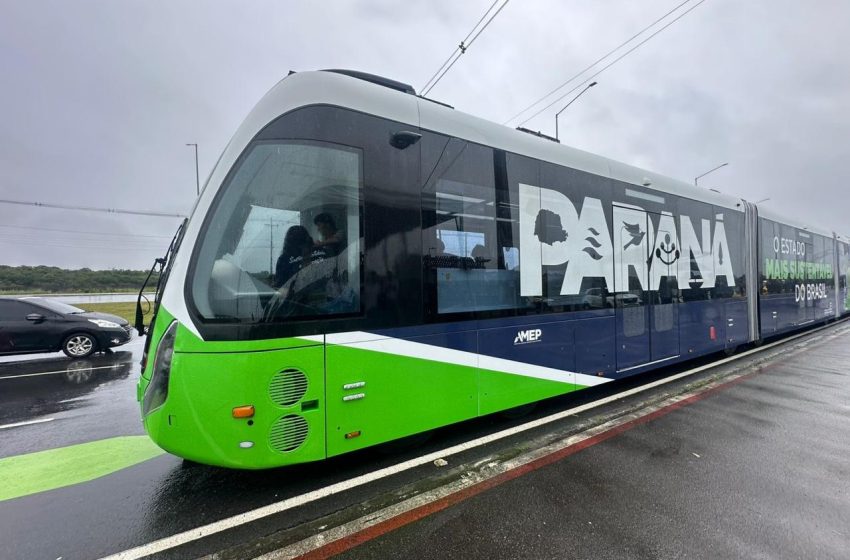
Curitiba does not have a metro in operation. The city has a metro line under construction, the Green Line, but still without a definitive forecast for the start of commercial operation for the complete stretch.
The Green Line is a rail transport project that has been developed by the government of Paraná and the Curitiba city hall over many years. The project provides for the connection between different regions of the city, but the deadlines have been repeatedly revised since the start of the works.
For tourists visiting Curitiba today, public transport is based exclusively on the buses of the integrated network. There is no forecast that the metro will be in operation in the short term, so the planning of the itinerary should consider only the bus system and other available modes.
Tourist rail transport: the Serra Verde Express and other train tours
Although Curitiba does not have a metro, the city is the starting point for one of the most recognized train tours in Brazil: the Serra Verde Express route, which connects Curitiba to Morretes and Paranaguá through the Serra do Mar.
The route crosses the Paraná Serra do Mar, passing through viaducts, tunnels, and Atlantic Forest vegetation. The trip offers landscapes that are not possible to see by any other mode, and lasts between two and three hours depending on the chosen destination.
The Serra Verde Express operates with different service classes, with varied prices. Departures leave from the Curitiba Rodoferroviária Station, in the Botanical Garden neighborhood. Tickets should be bought in advance, especially on weekends and high seasons.
Facilities and accessibility in Curitiba public transport
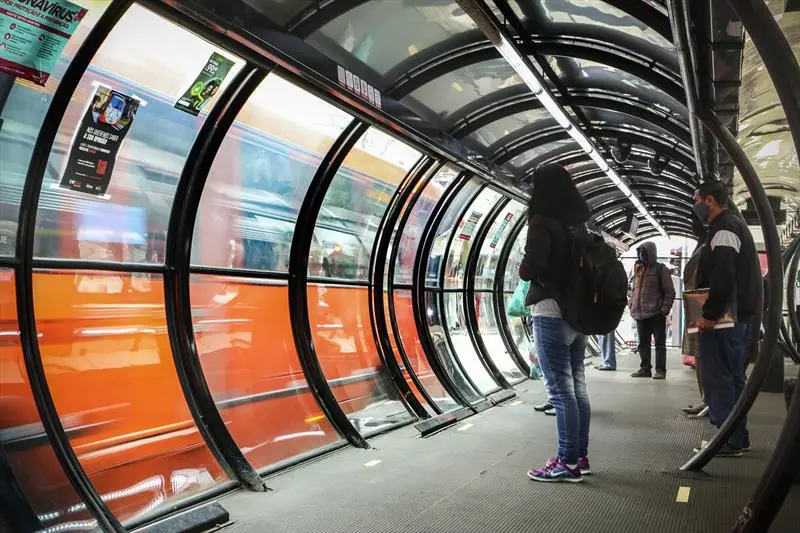
Curitiba’s urban mobility system was planned with attention to accessibility from the first versions of the project. Over the years, the features were expanded to serve different passenger profiles.
What facilities does the Curitiba mobility system offer for people with disabilities or reduced mobility?
Tube stations have platforms leveled with the bus floor, which eliminates steps and facilitates access for wheelchair users, the elderly, and people with reduced mobility. The fleet’s buses also have ramps and reserved spaces.
The elevated platform of the stations is one of the most efficient accessibility features of the system: the passenger enters the bus at the same level as the vehicle floor, without having to climb steps. This benefits not only wheelchair users but also people with strollers or heavy luggage.
In addition, the fleet includes buses adapted with access ramps, low floor, and reserved space for wheelchairs, in compliance with ABNT standards and federal accessibility legislation. The informative sound system in stations, already mentioned, is also part of the set of accessibility features.
Tourists with specific needs should consult URBS in advance to verify which lines and terminals have complete accessibility coverage, as infrastructure may vary between older and newer stations.
Tube stations: the icon of Curitiba urban transport
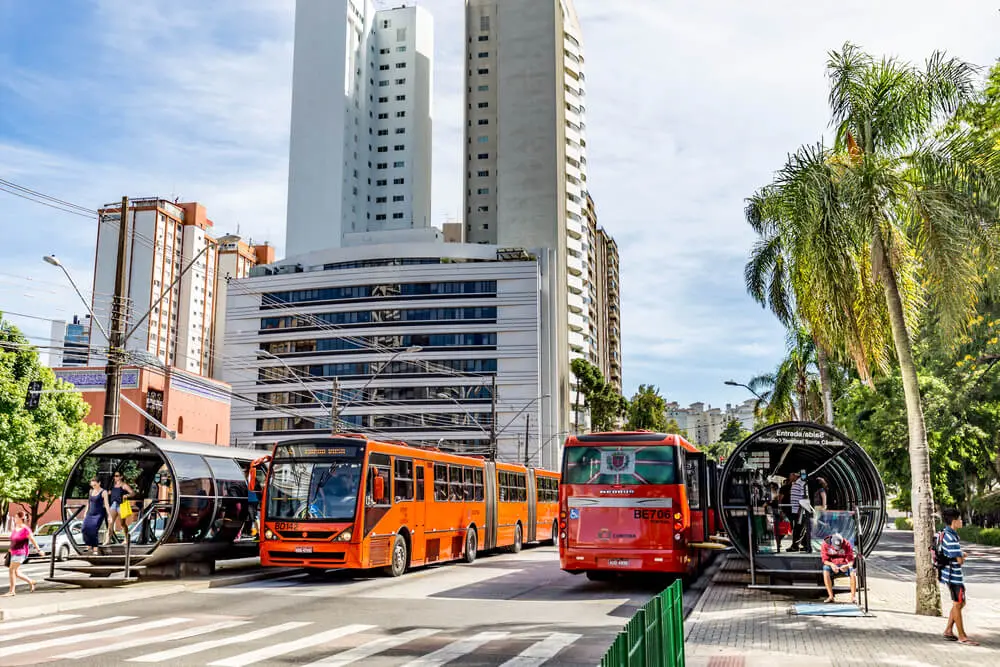
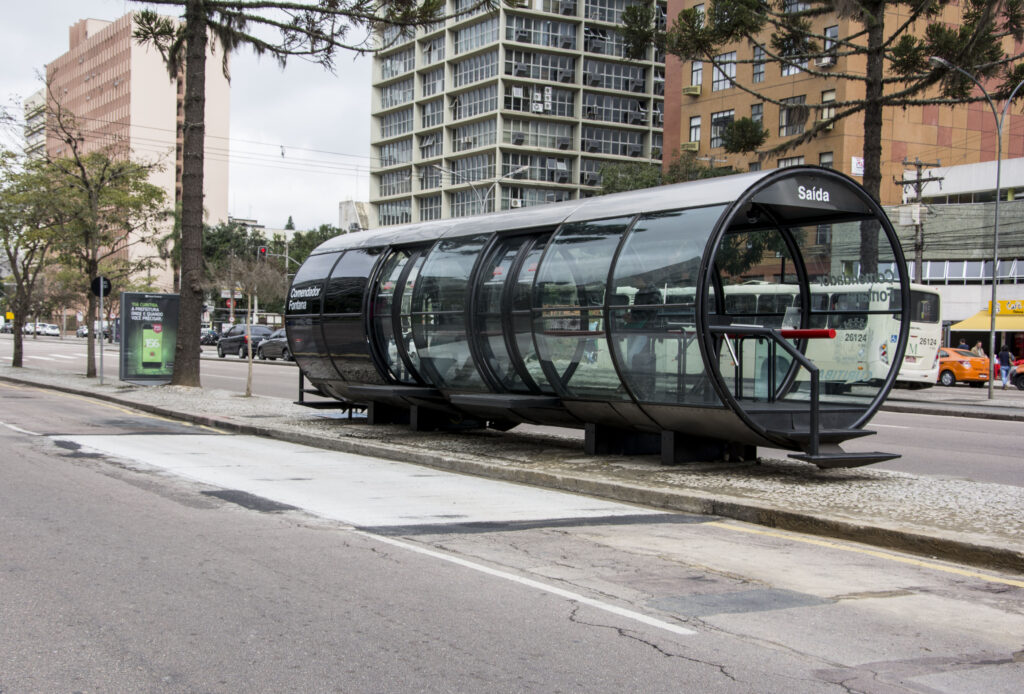
The tube stations are the most recognized symbol of Curitiba’s public transport and one of the elements that most catches the attention of tourists. The cylindrical steel and glass design was created by architect Jaime Lerner and debuted in the city in 1991.
The operation is simple: the passenger pays the fare or validates the Transport Card upon entering the station, waits for the bus on the elevated platform, and boards directly at the level of the vehicle floor, without lines at the door and without additional payment at the time of boarding.
This model reduced the stopping time of buses at stops and increased the efficiency of express lines. For the tourist, the tube stations also function as geographical reference points in the city, as they are distributed along the main corridors.
Map of the Curitiba public transport network to get around the city
Having access to the network map is the first step to planning trips with autonomy. Curitiba makes this resource available in different formats, both for digital and physical consultation.
How to use the line map to plan tourist tours in Curitiba?
The network map can be consulted on the URBS website and app, as well as on Google Maps. For tourists, the most practical way is to use the app to search for routes from the starting point and the desired destination.
The complete network map is available for download on the official URBS website in PDF format, useful for those who want an overview of the city before arriving. The document shows the express corridors, the integration terminals, and the main tube stations.
For the daily life of the trip, the route search in the app is more practical than the static map, as it considers schedules in real time and suggests the most efficient combination of lines for each journey.
A useful tip: identify on the map the integration terminals closest to your hotel. From that point, it becomes easier to trace routes to any attraction in the city, using the terminals as a connection base between lines.
Bodies responsible for collective transport in Curitiba: URBS and regulatory agencies
Understanding who manages public transport in Curitiba helps the tourist know where to look for official information, register complaints, or resolve doubts during the trip.
What is URBS and what is its role in transport management in Curitiba?
URBS (Urbanização de Curitiba S/A) is the municipal autarchy responsible for the planning, regulation, and supervision of the city’s collective transport. It defines itineraries, schedules, fares, and quality standards for the service provided by operating companies.
URBS does not operate the buses directly: the lines are granted to private companies that provide the service according to the contracts established by the autarchy. Supervision of compliance with these contracts, including schedules, vehicle conservation, and driver behavior, is the responsibility of URBS.
For the tourist, URBS channels are the main source of official information about the system: website, app, and the service center. Complaints about the service can also be registered directly with the autarchy.
In addition to URBS, the Paraná Regulatory Agency (AGEPAR) acts in the regulation of intercity and metropolitan transport services, which includes lines that connect Curitiba to the municipalities of the metropolitan region. For trips within the municipality, URBS is the competent body.
Is public transport in Curitiba worth it?
Public transport in Curitiba is a smart choice for those visiting the city: integrated, with wide coverage and affordable fares, it allows you to circulate through the main attractions without depending on a taxi or app for every outing.
The central point is understanding how the system works before arriving: the types of lines, the Transport Card, and the integration terminals are the three elements that make all the difference in daily life.
Brasil ATM works to keep information about destinations and transport systems always updated, but fares, schedules, and operational conditions may change without prior notice. Confirm the data on the official URBS website before traveling. To complete the planning of your stay in Curitiba, check the accommodation options in the city and the tours and experiences available to make the most of each day in the capital of Paraná.
Where to withdraw money at ATM24h cash machines in Brazil
To make the most of your itinerary through Curitiba, it is best to carry cash. This ensures a smooth and incredible experience. In some places, cash is essential for food, transport, tickets to attractions, and more.
Check the table below with some 24h ATM machines in the regions mentioned in this article:
| Where | Location |
|---|---|
| Afonso Pena International Airport | See all points here |
| Jockey Plaza Shopping Center | See all points here |
| Pestana Curitiba | See all points here |
| NH Curitiba The Five | See all points here |
Discover Brasil ATM
At Brasil ATM, we see Brazil as a place full of unique beauties and fascinating culture. Our portal, supported by the global brand ATM24h, reflects our love for Brazil. Our goal is to inspire tourists to explore its wonders safely and informedly.
We provide accurate, updated, and inspiring information in three languages. With us, you will have everything you need to plan your trip with confidence. We offer travel guides, detailed itineraries, and useful planning tips.
We want to create lasting memories and will show you the natural and cultural beauty of Brazil. Explore famous destinations like Rio de Janeiro and São Paulo, and discover hidden gems like Lençóis Maranhenses and Fernando de Noronha. We are here to help you make the most of your trip.

You might also like to read:
- Best Hotels in Curitiba: Selection with the highest-rated options
- What to do in Curitiba: 1, 2, and 3-day itineraries + practical tips
- Where to stay in Curitiba: Best neighborhoods and hotels by profile and budget
- Is Curitiba safe? What to know before visiting or living in the city
Frequently asked questions
The fare is flat for any destination within the city, regardless of the distance traveled. The amount may be adjusted periodically by the city hall; check the updated value on the official URBS website before the trip, as prices are subject to change.
Yes, but with reduced frequency. Some lines operate until midnight or beyond, while others end earlier. There is also a late-night service on certain routes. Check the specific schedules on the URBS app before planning night trips.
The Tourism Line is a bus that runs through the city’s main tourist spots with the option of boarding and disembarking at different stops along the circuit. It operates mainly on weekends and holidays. Payment can be made with the Transport Card or in cash directly on the vehicle, but confirm the updated conditions with URBS before the visit.
In general, the Curitiba bus system is considered safe for tourists, especially on express lines and at integration terminals. As in any large city, we recommend attention to personal belongings, avoiding displaying cell phones or valuables at stops, and preferring busier times.