














Understanding how to get around Rio de Janeiro goes far beyond choosing a means of transportation. Over years of monitoring domestic and international tourists, the Brasil ATM team has identified a clear pattern: travelers who plan their mobility before leaving the hotel save time, reduce costs, and avoid unnecessary risk situations.
Rio is a vast city with very different neighborhoods. Copacabana, Downtown, Barra da Tijuca, and Santa Teresa, for example, operate almost like cities within the city. Public transportation serves some areas well, while others require more planning or the use of ride-hailing services.
In this complete guide, you’ll find practical tips, comparisons, tables, and real experiences to get around Rio de Janeiro with greater safety, efficiency, and peace of mind—whether it’s your first visit or a return trip.

How does urban mobility work in Rio de Janeiro?
Before diving into practical tips, it’s important to understand the city’s logic.
Rio de Janeiro combines:
- Traditional public transportation (metro, buses, and trains)
- Exclusive systems such as BRT
- Strong presence of ride-hailing services
- Alternative options such as shared bicycles
Choosing the best option depends on three main factors:
- Where you are
- Time of travel
- Trip profile (tourism, work, nightlife)
This combination explains why there isn’t a single answer for those looking to understand how to get around Rio de Janeiro.
Metro in Rio de Janeiro: when is it worth using?

The metro is considered the most predictable and safest means of transportation for tourists.
Operated by MetrôRio, it serves the South and Central zones well, connecting strategic neighborhoods such as:
- Copacabana
- Ipanema
- Leblon
- Botafogo
- Downtown
Metro advantages:
- Regular schedules
- Air-conditioned cars
- Clear signage
- Integration with buses and VLT
Limitations:
- Does not directly reach Barra da Tijuca
- Does not cover more distant areas of the North Zone
Operating hours:
| Day | Operation |
| Monday to Saturday | 5:00 a.m. to midnight |
| Sundays and holidays | 7:00 a.m. to 11:00 p.m. |
Tip: for those staying in the South Zone, the metro is usually the best answer to how to get around Rio de Janeiro during the day.
Buses in Rio de Janeiro: are they worth it for tourists?
Rio’s bus system is extensive and covers almost the entire city. However, it requires attention.
Pros:
- Wide territorial coverage
- Low cost
- Integration with metro and BRT
Points of attention:
- Confusing routes for those unfamiliar with the city
- Heavy traffic during rush hours
- Lower time predictability
When to use buses:
- Short trips
- Areas not served by the metro
- When clearly indicated by Google Maps
Brasil ATM recommendation: if you’re not familiar with the city, use buses only with routes previously checked in navigation apps.
BRT: when does the express corridor make sense?
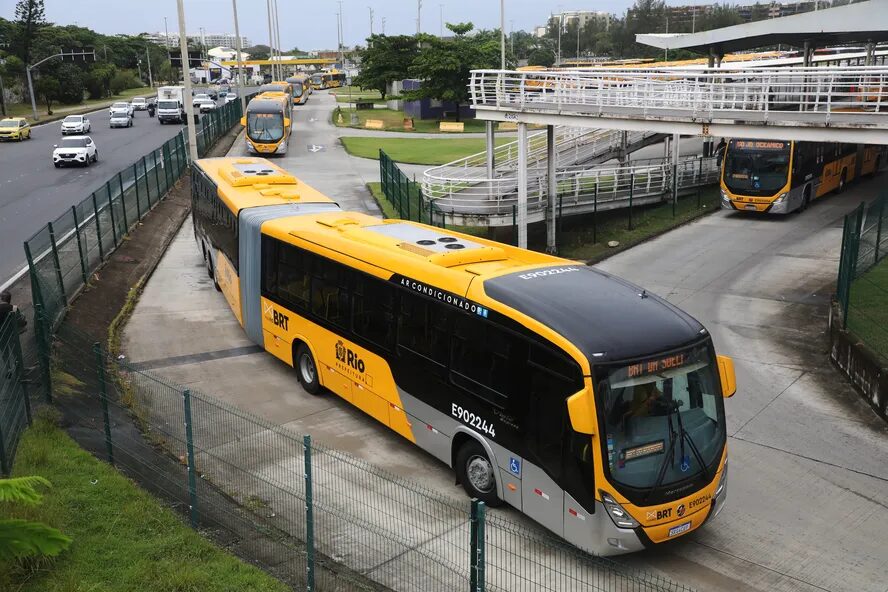
BRT was created to connect more distant areas, especially Barra da Tijuca.
Main corridors:
- Transoeste
- Transcarioca
- Transolímpica
Advantages:
- Exclusive corridors
- Reduced travel time on long routes
Disadvantages:
- Stations farther apart
- Less comfort during peak hours
For those wondering how to get around Rio de Janeiro between the airport and Barra, BRT can be useful when combined with other modes.
Ride-hailing in Rio de Janeiro: Uber, 99, and similar services
Ride-hailing is currently one of the most used options by tourists.
Main options:
- Uber
- 99
Advantages:
- Door-to-door service
- Predictable pricing
- Cashless payment
Disadvantages:
- Dynamic pricing
- Traffic can affect travel time
Average costs (estimate):
| Route | Average price |
| Copacabana → Downtown | R$ 25 to R$ 40 |
| Ipanema → Barra | R$ 40 to R$ 70 |
| South Zone → Santos Dumont Airport | R$ 20 to R$ 35 |
For many visitors, ride-hailing is the simplest way to get around Rio de Janeiro at night.
Are traditional taxis still worth it?
Taxis are still widely available, especially at airports and hotels.
When it’s worth it:
- Late-night arrivals
- Short trips
- When app prices are high
Attention:
- Prefer licensed taxis
- Make sure the meter is on
VLT in Downtown Rio: ideal for short trips

The VLT Carioca connects:
- Santos Dumont Airport
- Novo Rio Bus Terminal
- Port area
It’s an excellent option for getting around Downtown.
Bicycles and walking: when do they make sense?
Rio has extensive bike lanes along the beachfront.
Recommended for:
- Copacabana
- Ipanema
- Leblon
- Flamengo Park
The bike-sharing system is useful for leisure and short daytime trips.
Quick comparison: which transport should you choose?
| Situation | Best option |
| South Zone during the day | Metro |
| Night trips | Uber or taxi |
| Downtown Rio | VLT |
| Barra da Tijuca | Uber or BRT |
| Short outings | Walking or bike |
Safety while getting around: essential best practices
Knowing how to get around Rio de Janeiro also involves safety.
Recommended practices:
- Avoid displaying valuables
- Prefer predictable options at night
- Plan routes in advance
- Use ATMs in safe, busy locations
Practical tips to build your mobility strategy
Step by step:
- Identify your base neighborhood
- List attractions by area
- Combine metro + ride-hailing
- Avoid rush hours
- Always have an alternative plan
Conclusion – planning your transportation changes the experience
Understanding how to get around Rio de Janeiro is one of the factors that most impacts trip quality. When transportation works well, visitors enjoy more, get less tired, and reduce risks.
Over the years, the Brasil ATM team has realized that the secret lies in the smart combination of options: metro when possible, apps when needed, and planning at all times.
Want more practical tips to get around Rio safely, find 24h ATMs, and avoid setbacks?
Access other Brasil ATM guides now and travel with more peace of mind from day one.
Where to withdraw cash from ATM24h in Brazil
To make the most of your Rio de Janeiro itinerary, carrying cash is a good idea. It ensures a smooth and hassle-free experience. In some places, cash is essential for food, transportation, attraction tickets, and more.
Check out the table below for 24-hour ATMs in the locations mentioned in this article:
| Where | Location |
| Aeroporto Internacional do Galeão | View locations here |
| Aeroporto Santos Dumont | View locations here |
| MetrôRio | View locations here |
| Sheraton Rio & Resort | View locations here |
| Ipanema Beach Hostel | View locations here |
Discover Brasil ATM (At The Moment)
At Brasil ATM, we see Brazil as a place full of unique beauty and fascinating culture. Our portal, supported by the global ATM24h brand, reflects our love for Brazil. We aim to inspire tourists to explore its wonders safely and informed.
We provide accurate, updated, and inspiring information in three languages. With us, you’ll have everything you need to plan your trip with confidence. We offer travel guides, detailed itineraries, and helpful planning tips.
We want to create memories that last. We’ll show you the natural and cultural beauty of Brazil. Explore famous destinations like Rio de Janeiro and São Paulo, and discover hidden gems like Lençóis Maranhenses and Fernando de Noronha. We’re here to help you make the most of your trip.

You may also like about Rio de Janeiro:
- What to Do in Rio de Janeiro – Must-See Attractions to Make the Most of the City
- How to withdraw money in Rio de Janeiro – Best practices to avoid fees and risks
- 3-Day Itinerary in Rio de Janeiro – + tips for visiting with kids
- Things to do in Lapa, Rio de Janeiro’s bohemian neighborhood
Frequently asked questions about how to get around Rio de Janeiro
The best way depends on the area and time of day. The metro works very well in the South Zone and Downtown, while ride-hailing apps are ideal at night and for direct routes. Plan your trips more safely and efficiently with Brasil ATM guides.
Yes, with planning. The metro and VLT are considered the most predictable options for tourists, while buses require extra attention and well-defined routes. See updated guidance and urban safety tips on Brasil ATM.
Absolutely, especially at night, for long trips, or outside metro-covered areas. Ride-hailing offers convenience and predictable pricing. Check cost comparisons and mobility best practices on Brasil ATM.
Yes. For most visitors, public transportation combined with ride-hailing covers the main tourist areas well, without the costs and challenges of driving in the city. Learn how to build your ideal mobility strategy with Brasil ATM.