















Withdrawing cash while traveling is a common transaction, but it requires some precautions. ATM scams may involve card cloning, card or cash trapping, hidden cameras and even people approaching you to offer help you did not request.
At Brasil ATM, safety is part of the guidance we consider essential for anyone planning a trip around the country. Our work is to help Brazilian and international tourists find reliable information to travel with greater peace of mind and awareness, a concern that is also among the main needs of the audience for whom we produce content.
The good news is that many fraud attempts show signs that can be noticed if you pay attention. Inspecting the machine before inserting your card, shielding your PIN, refusing help from strangers and choosing suitable places to withdraw cash are simple actions that make a difference.
In this guide, we explain the best-known ATM scams, how to recognize signs of tampering and what to do when faced with a suspicious situation, especially while traveling.
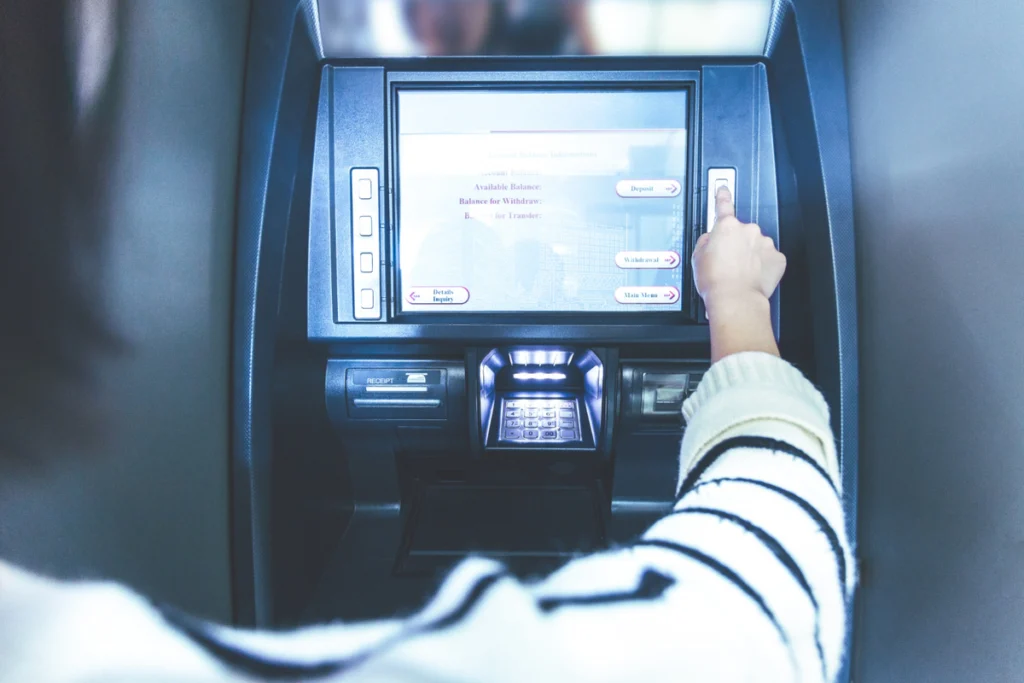
What are ATM scams?
ATM scams are fraud schemes designed to steal money, bank details, PINs or card information from people making withdrawals. Learning about the main scams is one of the best ways to protect yourself while traveling.
These scams are not exclusive to any one country. Techniques such as skimming, card trapping, hidden cameras and PIN observation are documented by authorities and financial institutions in different parts of the world.
The FBI, for example, warns that tourist areas can be attractive targets for skimming devices and recommends inspecting the terminal, shielding the keypad when entering your PIN and, whenever possible, using machines installed indoors and in well-lit areas.
Tourists face an additional challenge: they often use an unfamiliar machine, carry luggage, focus on their itinerary or have difficulty with the local language. All of this can reduce their attention during a financial transaction.
Therefore, the recommendation is simple: treat a withdrawal as a banking transaction, even when you are on vacation.
Before you begin:
- inspect the ATM;
- check the card reader and keypad;
- keep other people at a comfortable distance;
- have your card ready;
- shield your PIN;
- do not accept help from strangers;
- stop the transaction if you notice any unusual behavior.
What are the most common ATM scams?
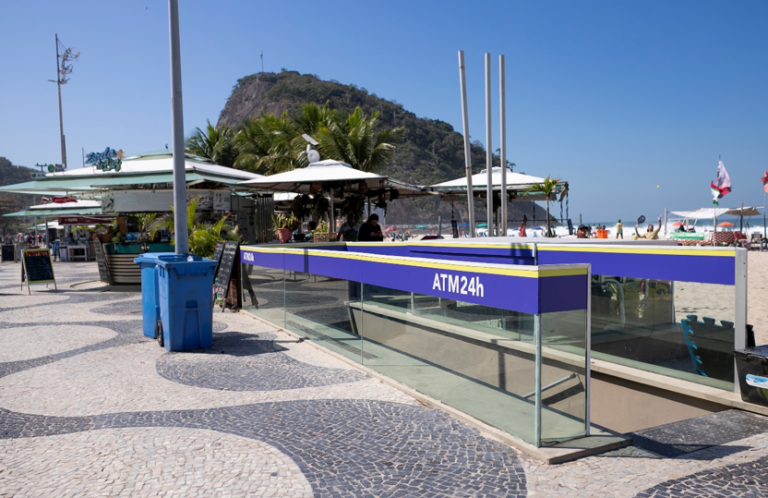
Although there are different types of fraud, many scams use devices installed on the ATM or distraction techniques to try to obtain the user’s details, card, PIN or cash.
See the main types:
| Scam | How it works | Main warning sign |
| Skimming | A device attempts to copy card information | A reader that looks different, loose or overlapping |
| Card trapping | A mechanism prevents the card from being returned | The card gets stuck and someone offers help |
| Fake keypad | An overlay records the PIN entered | A raised, loose or different keypad |
| Hidden camera | A small camera records the PIN | Unusual parts or objects near the keypad |
| Cash trapping | A device blocks the cash dispenser | The withdrawal is completed, but the cash does not appear |
| PIN observation | Someone watches the PIN being entered | A person standing excessively close |
| Distraction | The user’s attention is diverted from the transaction | An unexpected approach during or immediately after the withdrawal |
Card cloning (skimming)
Skimming is one of the best-known forms of ATM fraud. A device called a skimmer is installed on the card reader to capture data while the card is being used.
In some cases, the fake device is designed to look like an original part of the ATM. The FBI explains that these devices can be installed over the real reader and combined with a hidden camera or fake keypad to capture the PIN as well.
Therefore, inspect the reader before inserting your card. Loose, crooked or damaged parts, glue marks, tape or components that appear to overlap are signs that you should not use that machine.
It is also worth gently moving the reader to see whether it appears firmly integrated into the machine. Do not try to dismantle or remove a suspicious part: step away and notify the person responsible for the location or the operator.
Card trapping
Another possible scam uses a device placed inside the reader to trap the card in the ATM.
The user believes there has been a malfunction. At that moment, a scammer may approach, offer help and try to convince the victim to enter the PIN again. After the person gives up and leaves, the criminal may retrieve the card.
This type of fraud, known as card trapping, is documented by financial institutions and organizations specializing in payment security.
Did your card get stuck? Do not accept help from a stranger or enter your PIN again because someone asked you to. Contact your bank or the machine operator through an official channel and consider blocking the card immediately.
Fake keypads and hidden cameras
Stealing card data is not enough for certain transactions: the criminal may also try to discover the PIN.
That is why some skimming schemes use fake keypads placed over the real keypad or small cameras positioned to record the numbers entered.
The camera may be hidden inside a seemingly normal ATM component or a nearby object. The FBI recommends covering the keypad with your other hand while entering your PIN, as a camera may be installed in different positions around the terminal.
Also inspect the keypad. A surface that is misaligned, unusually raised, loose or different in appearance from the rest of the machine deserves attention.
Cash trapping
The card is not always the target. In a scam known as cash trapping, a device is placed over the cash dispenser to prevent the banknotes from reaching the user.
The transaction may appear to have been completed normally, but the banknotes remain trapped. The traveler assumes there was a problem with the machine, leaves and the fraudster returns to collect the retained cash.
In 2026, law enforcement authorities again issued warnings about this method, recommending that users check the cash dispenser and immediately notify the bank or operator when the withdrawal is recorded but the cash is not dispensed.
If the amount appears as debited and the banknotes are not released, do not simply assume that the transaction will be corrected. Remain in a safe place, record the transaction details and contact the bank and the ATM operator through official channels.
PIN observation
Not every scam requires technology.
Shoulder surfing occurs when someone watches a PIN being entered, usually by standing too close to the user. An attempt to steal the card, swap it or use another approach may follow.
Prevention is simple: keep other people at a distance and use your free hand to cover the keypad completely while entering your PIN. This recommendation also helps protect against hidden cameras.
If someone insists on standing too close, cancel the transaction.
Distraction scams
Someone drops something beside you. Another person asks whether a particular object belongs to you. Someone requests information just as the cash is being dispensed.
It may seem like a coincidence, but distraction techniques are also used in ATM fraud.
The goal is to make the user look away from the card or cash for a few seconds. Financial institutions even warn about situations in which criminals distract the victim and swap their card for a similar one.
Stay focused on the transaction while withdrawing cash. A conversation can wait a few seconds.
How can you avoid ATM scams?
Some simple precautions reduce the risk of fraud during a withdrawal. The most important thing is to observe your surroundings, protect your information and abandon the transaction if you notice any irregularity.
- Inspect the ATM before using it. Examine the reader, keypad and cash dispenser. Loose, misaligned or damaged parts, or glue residue, are warning signs.
- Cover the keypad when entering your PIN. Use your other hand as a visual barrier. This protection makes both direct observation and recording by hidden cameras more difficult.
- Never accept help from strangers. Banco Central do Brasil itself recommends refusing assistance from strangers when withdrawing cash or carrying out other ATM transactions. When you are at a bank branch, approach only identified employees.
- Prefer ATMs in busy, controlled locations. Airports, hotels, shopping malls, stations and other establishments with a steady flow of people can provide a more suitable environment for the transaction.
- Avoid withdrawing cash in isolated places late at night. In addition to fraud involving the machine, consider your personal safety when deciding where and when to withdraw money.
- Check your bank statement regularly. Enable transaction notifications when your bank offers this feature. This helps you quickly identify activity you do not recognize.
- Stop the transaction if you notice any irregularity. Another ATM is always a better option than taking an unnecessary risk.
Discover Brazil as you have never seen it: find practical information on Brasil ATM to plan a safer and more peaceful trip around the country.
Where is it safer to withdraw cash?
The location of the ATM matters. Whenever possible, prioritize machines installed in busy, well-lit environments and connected to identifiable establishments.
Options that may be more convenient while traveling include:
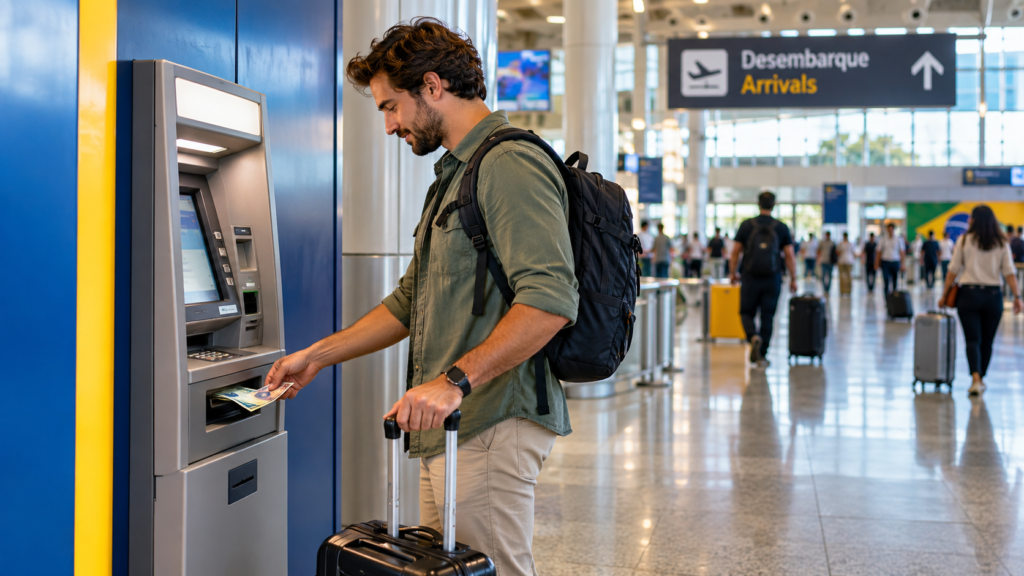
- airports, especially passenger circulation areas;
- hotels, which allow you to withdraw cash inside the establishment itself;
- shopping malls, because of the flow of people and the location’s infrastructure;
- subway stations, especially in busy areas;
- partner establishments and tourist attractions, provided that the machine and its operator are clearly identified.
This does not mean that an ATM installed in these places cannot be tampered with. Inspecting the machine remains necessary everywhere. The FBI notes that even indoor ATMs can be compromised, although it considers machines installed indoors and in well-lit locations less vulnerable targets.
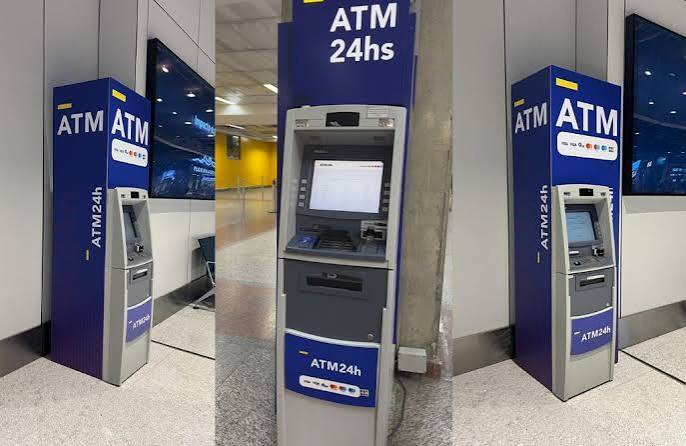
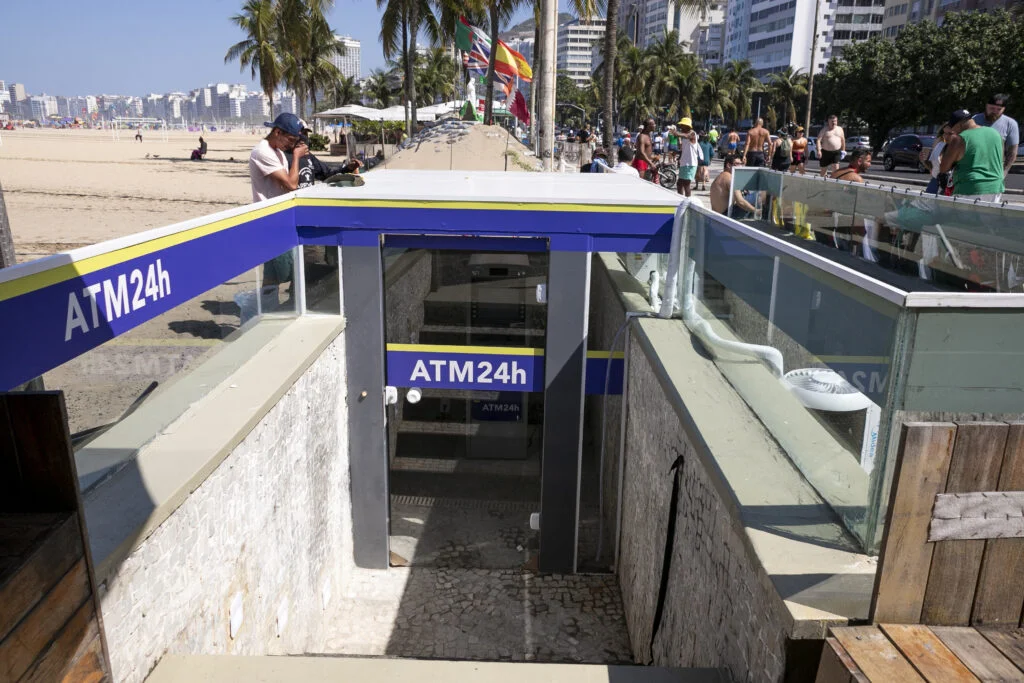
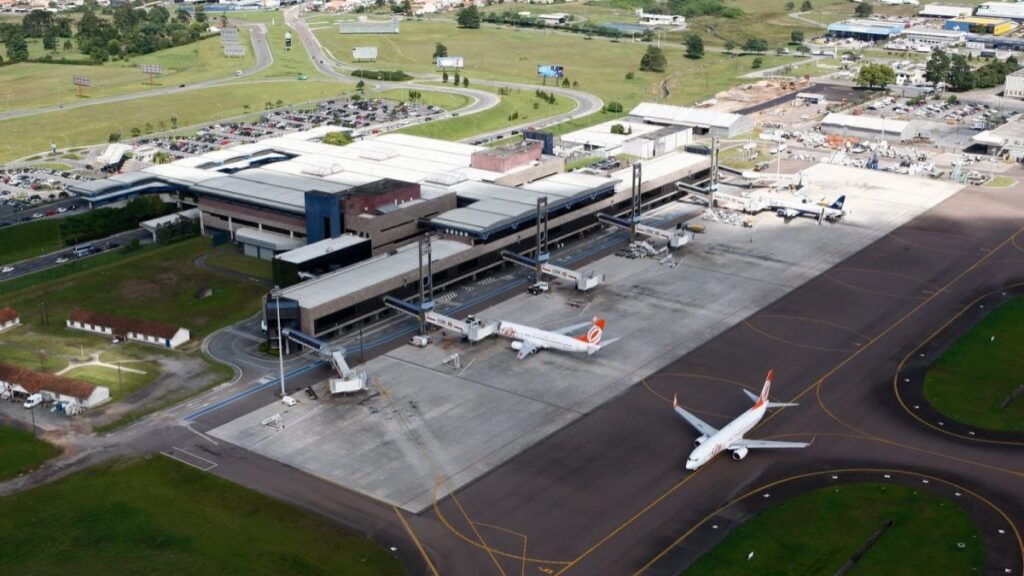
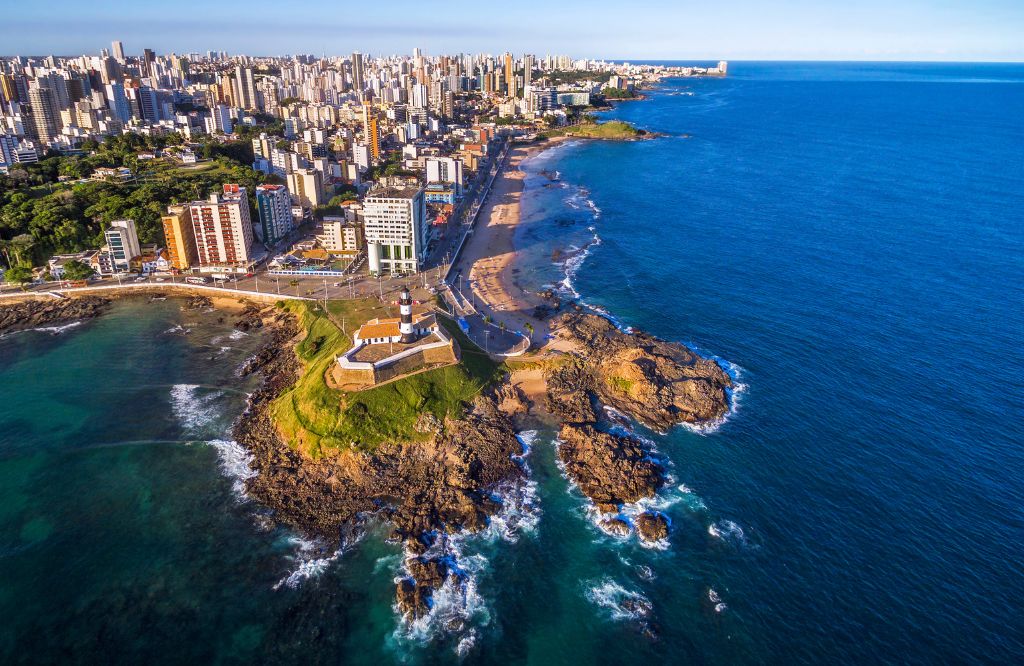
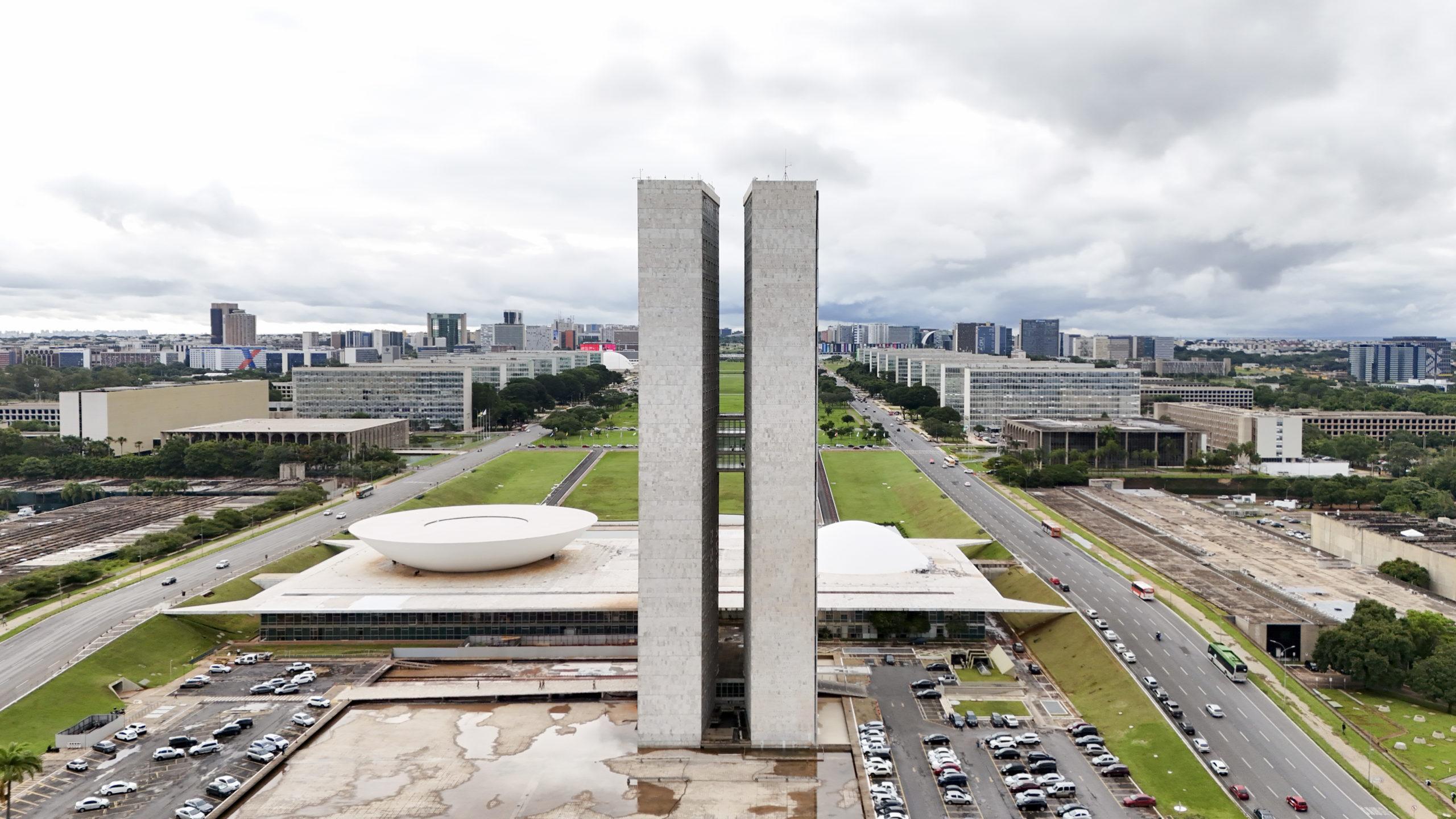
In Brazil, ATM24h operates ATM24h machines in locations of interest to travelers, including airports, hotels, shopping malls, subway stations, ports and tourist attractions. The official list includes airports such as Guarulhos, Congonhas, Santos Dumont, Brasília, Salvador, Curitiba and Florianópolis, as well as hotels and establishments in different Brazilian cities.
ATM24h machines allow withdrawals in Brazilian reais using domestic and international Visa and Mastercard cards, subject to the conditions applicable to the card and issuing institution.
How can you identify a tampered ATM?
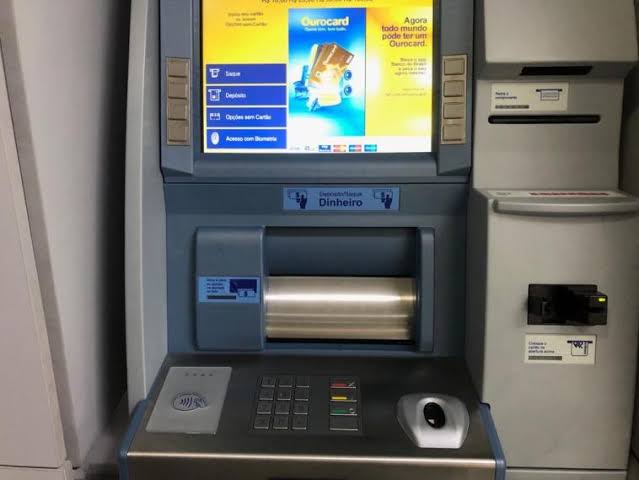
Before inserting your card, perform a quick visual inspection. A tampered ATM may have loose, overlapping or misaligned components, or parts that look different from the rest of the machine.
Pay particular attention to:
- a loose or protruding card reader: this may indicate that a device has been installed over the original reader;
- a keypad that looks different from the standard one: look for unusual height, movement or misaligned parts;
- cameras or suspicious small holes: especially those aimed at the keypad;
- an altered cash compartment: additional parts or a dispenser that appears blocked deserve attention;
- glue or tape marks: these may indicate that a component was temporarily installed;
- unusual on-screen messages: especially instructions asking you to follow procedures different from what is expected;
- people standing excessively close: especially someone watching your transaction or trying to help without being asked.
The FBI specifically recommends looking for loose, crooked, damaged or scratched parts, or signs of adhesive, before using a reader.
Did you find something unusual? Do not try to remove the device. Do not use the ATM and report your suspicion to the operator or establishment.
What should you do if you suspect a scam?
Acting quickly can reduce losses and prevent new transactions. If you suspect fraud, prioritize blocking the card and contacting the financial institution.
1. Block the card immediately
Use the app or another official channel provided by the financial institution. If a card is lost, stolen or compromised, blocking it prevents further attempts to use it.
2. Contact the bank
Report exactly what happened: the location, time, transaction amount and any unusual behavior you noticed.
Banco Central do Brasil advises scam victims to contact their financial institution and report the incident.
3. File a police report when necessary
In cases of fraud or financial loss, file a police report and gather documents related to the incident. This is also guidance from Banco Central do Brasil.
4. Monitor your account
Review statements, purchases and withdrawals. Did you find an unfamiliar transaction? Notify the financial institution immediately and dispute the transaction through the channels provided by the bank.
5. Keep the transaction receipts
Save receipts, app notifications, the time, ATM location and customer service reference numbers. This information may be important when the incident is reviewed.
Is it safe to withdraw cash from ATMs in Brazil?
Yes. You can use ATMs safely in Brazil by taking the same precautions recommended for financial transactions in other countries: choose the location carefully, inspect the machine, shield your PIN and monitor your bank account.
International tourists should also confirm in advance whether their card is enabled for international withdrawals, the limits set by the issuer and any fees or conditions that may apply.
For Visa or Mastercard users, the ATM24h network offers withdrawals in Brazilian reais with compatible domestic and international cards. The network itself states that its machines are installed in locations such as airports, hotels, shopping centers and tourist attractions.
Regardless of the network you choose, follow these basic precautions:
inspect → insert the card → shield your PIN → follow the transaction → collect the card and cash → check your account afterward.
And never allow a stranger to conduct the transaction for you. Banco Central do Brasil explicitly recommends that users never hand their card or PIN to third parties and never accept help from strangers to make withdrawals. .
How can you withdraw cash more safely while traveling?
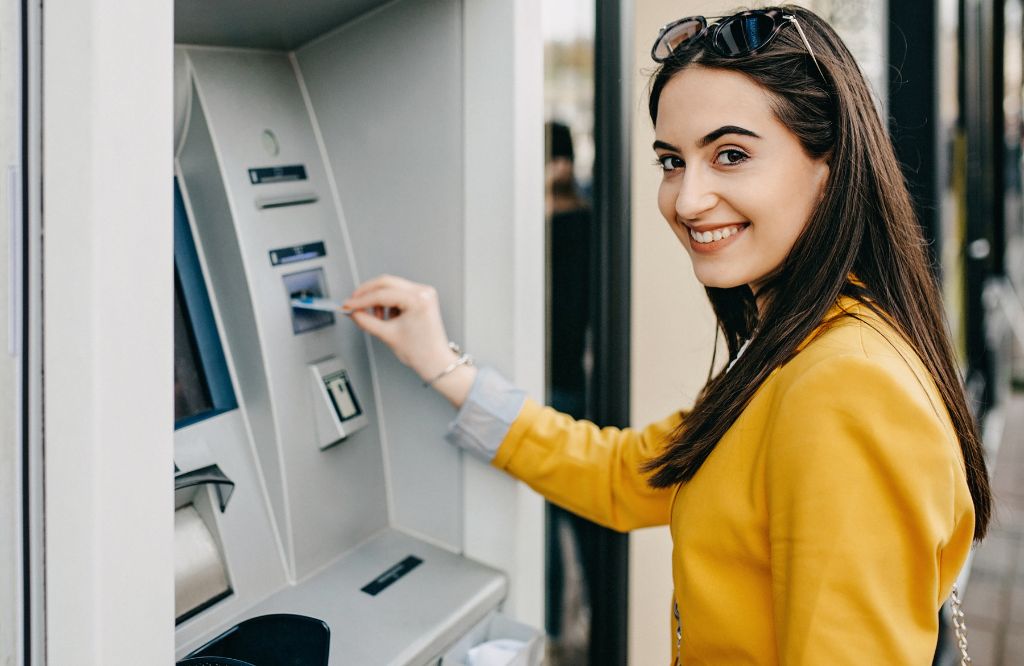
To withdraw cash more safely while traveling, choose the location carefully, examine the ATM, shield your PIN and monitor your bank transactions.
Before traveling, it is also worth enabling bank notifications and checking the channels available for blocking your card. That way, if something happens, you will already know how to respond.
When making a withdrawal, remember this sequence:
- Choose a busy, well-lit location;
- inspect the machine before inserting your card;
- keep other people at a distance;
- cover the keypad while entering your PIN;
- do not accept help from strangers;
- collect and put away your card and cash before leaving;
- check the transaction in the app or on your bank statement.
While traveling in Brazil, whenever convenient, you can also look for ATM24h machines installed at airports, hotels, shopping malls, subway stations and other partner establishments. The network has locations in different Brazilian tourist destinations and serves compatible domestic and international cards.
Safety while traveling does not have to mean constant worry. Information, awareness of your surroundings and a few simple habits help make withdrawing cash a practical part of your itinerary rather than a source of unexpected problems.
Continue exploring Brasil ATM and discover everything you need to travel around Brazil more safely and conveniently.
Where to withdraw cash from ATM24h machines in Brazil
To make the most of your itinerary in Brazil, it is best to carry cash. This helps ensure a smooth and incredible experience. In some places, cash is essential for food, transportation, attraction tickets and more.
See the table below with some ATM24h machines in the areas mentioned in this article:
| Where | Location |
| Aeroporto Internacional do Galeão | See all locations here |
| Aeroporto Santos Dumont | See all locations here |
| MetrôRio | See all locations here |
| Sheraton Rio & Resort | See all locations here |
| Ipanema Beach Hostel | See all locations here |
Discover Brasil ATM
At Brasil ATM, we see Brazil as a place filled with unique beauty and fascinating culture. Our portal, supported by the global ATM24h brand, reflects our love for Brazil. Our goal is to inspire tourists to explore its wonders safely and with reliable information.
We provide accurate, up-to-date and inspiring information in three languages. With us, you will have everything you need to plan your trip with confidence. We offer travel guides, detailed itineraries and useful planning tips.
We want to create lasting memories. We will show you Brazil’s natural and cultural beauty. Explore famous destinations such as Rio de Janeiro and São Paulo, and discover hidden gems such as Lençóis Maranhenses and Fernando de Noronha. We are here to help you make the most of your trip.
You may also like to read:
- Best restaurants in Curitiba: Guide to fine dining, local cuisine and tips
- 5-star hotels in Curitiba: Complete guide to the best options
- 4-star hotels in Curitiba: The best
- 3-star hotels in Curitiba: Guide to choosing safely
Frequently asked questions about ATM scams
The best known include skimming, card trapping, fake keypads, hidden cameras, cash trapping, PIN observation and distraction scams. In many of them, the goal is to combine card details and the PIN to carry out fraudulent transactions.
Look for loose or misaligned parts, overlapping readers, a different keypad, glue marks, unusual components and changes to the cash dispenser. If you notice anything suspicious, do not use the machine.
Yes. Follow basic safety precautions and prefer clearly identified machines in suitable locations. Tourists can also find ATM24h machines at airports, hotels, shopping malls, stations and other locations in different Brazilian destinations.
Do not accept help from strangers and do not disclose or re-enter your PIN at someone else’s request. Immediately contact your bank and the ATM operator through official channels, and block the card if there is a risk that it has been compromised.
Cover the keypad completely with your other hand while entering the PIN and do not allow other people to stand close to you. This measure helps protect against direct observation and hidden cameras.
Indoor, well-lit and busy environments may reduce some opportunities for tampering and provide greater control over the surroundings, but no location completely eliminates the risk. Inspect the ATM before every withdrawal, including at airports and hotels.