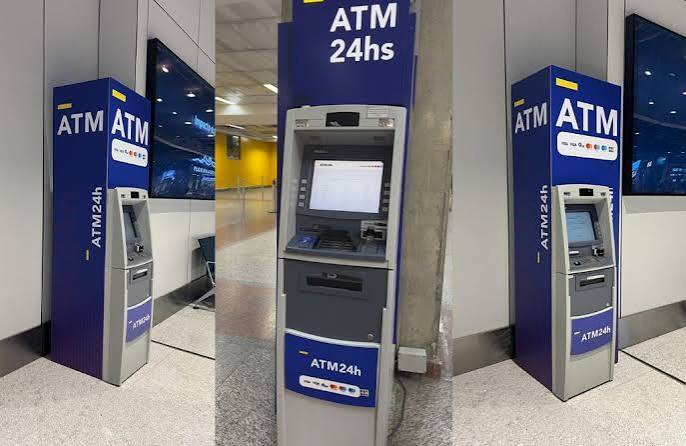








Most major Brazilian airports have ATMs available 24 hours a day, including networks such as Banco do Brasil, Caixa Econômica Federal, Bradesco and ATM 24h. The terminals accept domestic and international cards, but fees are usually higher than at conventional bank branches. Planning your withdrawal in advance reduces costs and prevents unexpected problems.
Finding an ATM at a Brazilian airport is often one of the first concerns after landing. Whether you need cash to pay for a taxi, excess baggage or your first meal outside the terminal, knowing where to withdraw money can make the start of your trip much easier.
Finding an ATM at a Brazilian airport is possible in most cases, but it is not always simple: machines are spread throughout different areas of the terminal, accepted networks vary by bank and fees may surprise unprepared travelers.
The country’s main airports, such as Guarulhos, RIOgaleão, Confins and Fortaleza Airport, have self-service terminals from different institutions, some operating 24 hours a day. Foreign tourists need to be especially careful: not every machine accepts cards issued outside Brazil, and the exchange rates applied to transactions are rarely the most favorable on the market.
The Brasil ATM editorial team researched and organized information about banks, ATM networks, fees and alternatives available at the country’s main airport terminals. Here you will find everything you need to decide whether to withdraw cash at the airport or whether it is better to plan ahead before boarding.
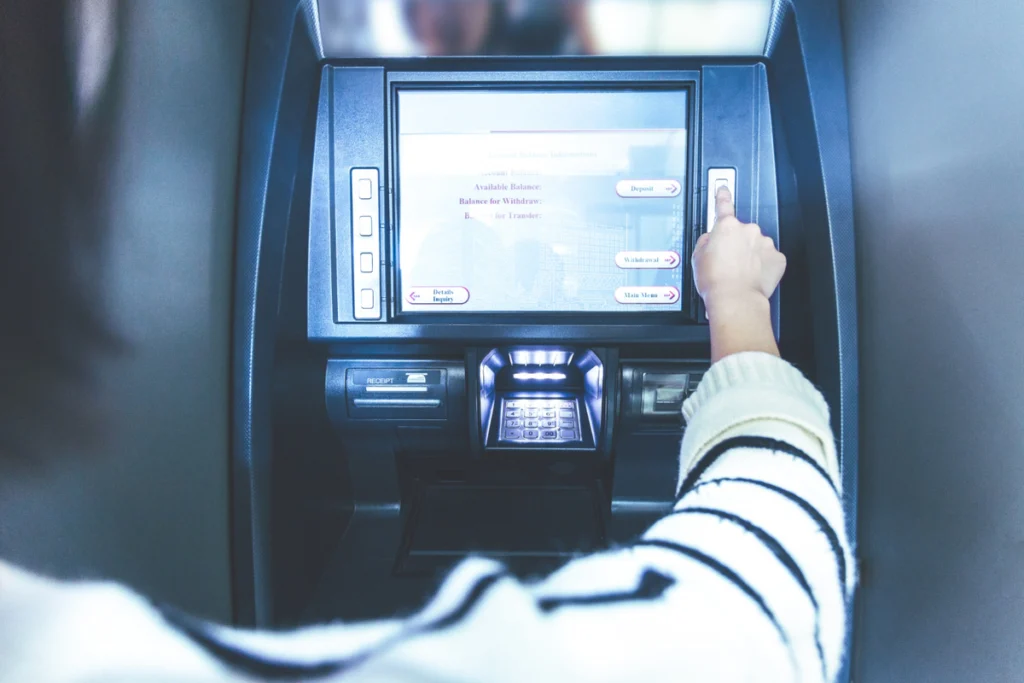
ATM at a Brazilian airport: What you need to know before boarding
Medium-sized and major Brazilian airports have at least one operational bank self-service terminal. The number of machines varies considerably: international terminals usually have more options and different networks, while regional airports may have only one or two machines, sometimes without 24-hour availability.
Which Brazilian airports have ATMs available?
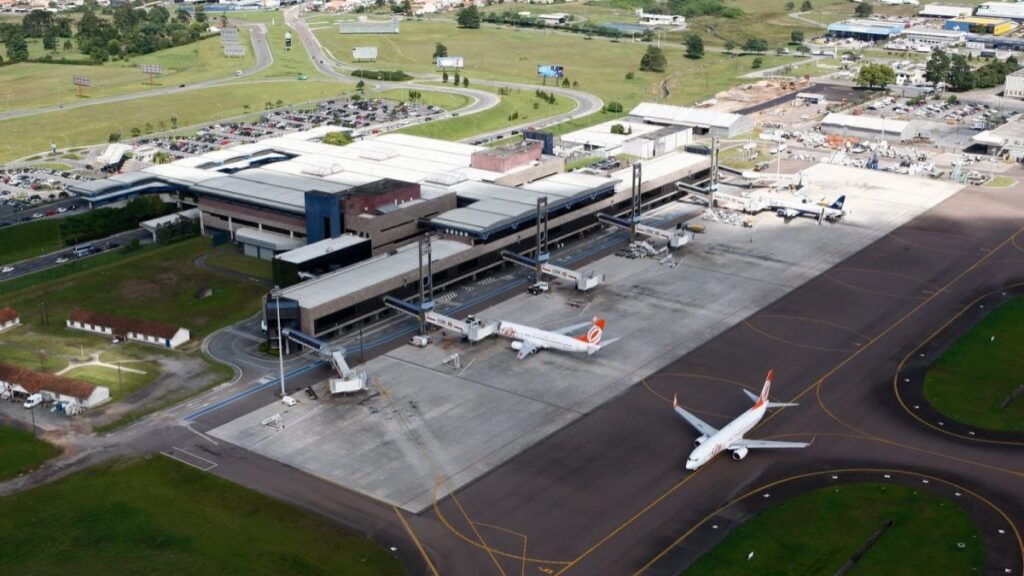
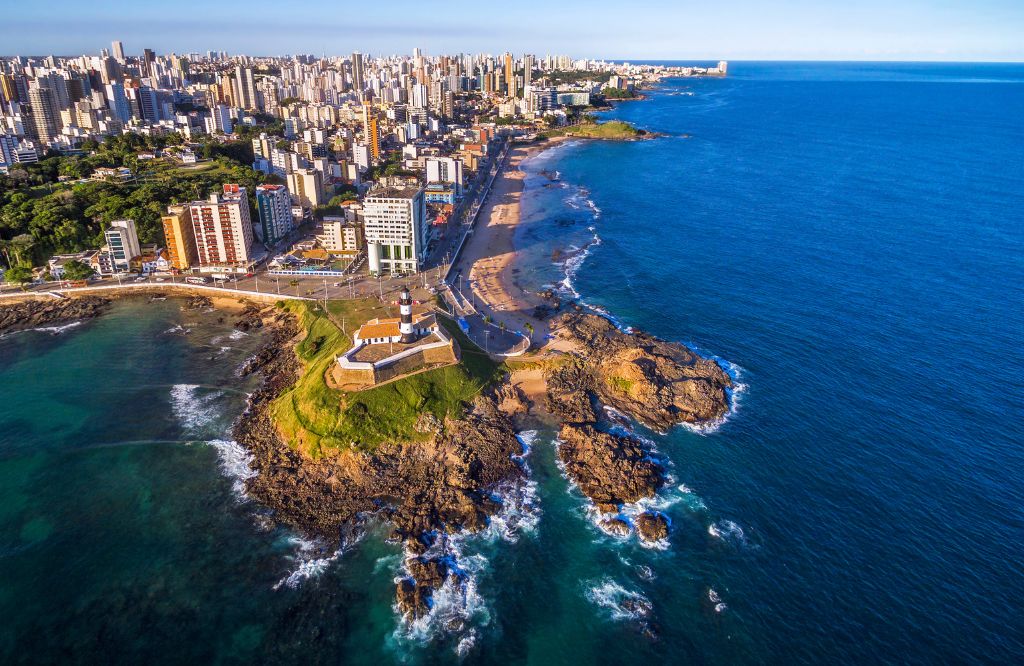
Brazil’s main airports, Guarulhos (GRU), RIOgaleão (GIG), Confins (CNF), Fortaleza (FOR), Salvador (SSA) and Porto Alegre (POA), have operational ATMs, with at least one network available in the departures or arrivals areas.
Airports such as Salvador, Fortaleza and Porto Alegre also have terminals from Banco do Brasil, Caixa Econômica Federal and Banco 24 Horas, according to information released by the terminal operators themselves. Availability drops considerably in smaller destinations, making withdrawing cash before boarding the safest option.
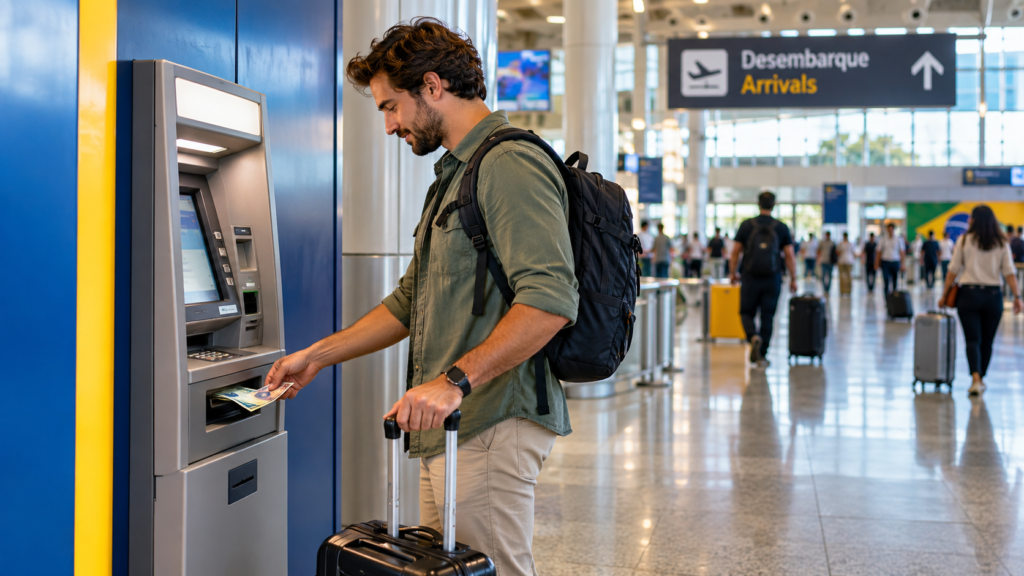
For passengers arriving on an international flight, the arrivals area usually has at least one operational machine immediately after immigration control. This provides access to cash within the first few minutes on Brazilian soil, even outside business hours.
Is it worth withdrawing cash from an airport ATM or is it better to avoid it?
Withdrawing cash from an airport ATM is convenient, but it usually costs more than at bank branches outside the terminal. It may make sense for small emergency amounts; for larger withdrawals, research the fees first.
Airport ATMs charge, on average, convenience fees that do not apply at terminals installed inside bank branches. International cards are also subject to IOF (Tax on Financial Transactions) and the conversion rate applied by the card-issuing bank, which increases the final cost of the transaction.
The practical rule is simple: if your final destination has nearby bank branches, it is worth waiting to withdraw cash there. If the airport is the only place where you can access cash during the first hours of your trip, withdrawing from a terminal is the most viable alternative, provided you take only the amount needed to cover your initial expenses.
Banks and ATM networks available at Brazilian airports
The country’s main financial institutions operate self-service terminals at Brazilian airports, but the presence of each bank varies according to the terminal and airport size. Knowing which networks are available helps you choose the machine most compatible with your card and avoid unnecessary fees.
ATM 24h
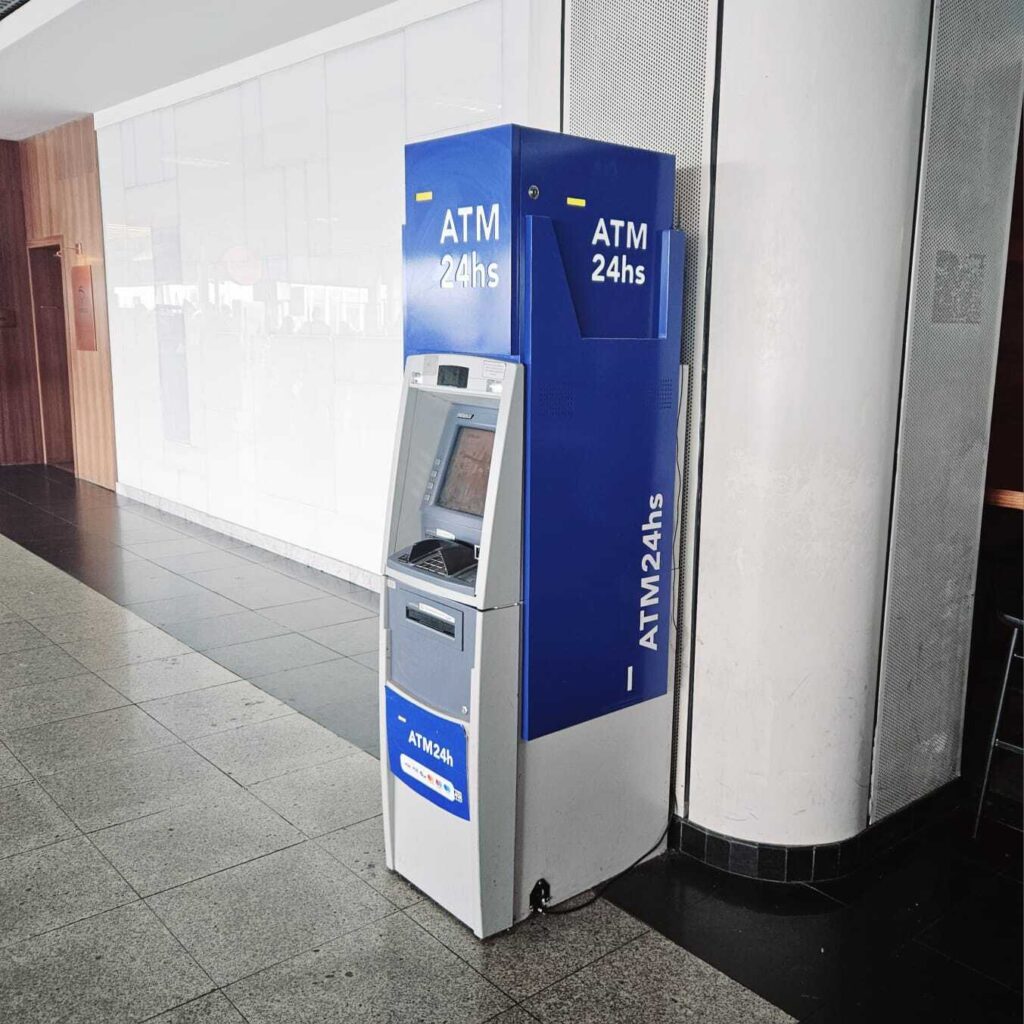
ATM24h machines are among the most practical solutions for withdrawals at Brazilian airports, especially for domestic and foreign tourists. They accept cards from several payment networks, including Visa, Mastercard and Elo, and are available at strategic points in the country’s main airport terminals.
For foreign travelers, ATM24h machines usually provide an interface in more than one language, making transactions easier immediately after arrival. Check the exact location inside the terminal before landing, as signage is not always clear in baggage claim areas.
Banco do Brasil
Banco do Brasil operates self-service terminals at a large number of medium-sized and major Brazilian airports. The machines accept cards from its own network and partner networks, as well as international cards with a chip and PIN.
For foreign-currency withdrawals or transactions with cards issued outside Brazil, Banco do Brasil offers currency exchange at some branches near airport terminals, but not directly through its ATMs. Confirm availability at your destination airport before relying on this service.
Caixa Econômica Federal
Caixa Econômica Federal has an established presence at Brazil’s main airports, with terminals that accept debit and credit cards from its own network and partner networks such as Cirrus and Plus. Its machines usually have shorter lines during peak periods outside business hours.
Caixa account holders can make withdrawals, check balances and statements, and make payments directly at terminals installed in airports. For those who do not have an account with the bank, transactions are limited to withdrawals using cards from other institutions that are compatible with the network.
Bradesco, Itaú and Santander
Bradesco, Itaú and Santander also operate terminals at Brazil’s busiest airports, generally in domestic departures areas or terminal shopping galleries. Their distribution is less uniform than Banco do Brasil and Caixa, and some terminals have only one of these institutions.
Santander is a relevant option for foreign tourists because the bank has international operations and its terminals usually accept a wider range of cards issued outside Brazil. Itaú and Bradesco also accept international cards, but withdrawal fees for non-account holders vary by transaction.
Banco 24 Horas network: Where to find it within airport facilities
The Banco 24 Horas network is one of the most extensive in Brazil and is available at several airports throughout the country. It operates as an interoperable network: account holders from different banks can make withdrawals and balance inquiries at the same terminal without having to find their bank’s specific machine.
For travelers, this is a real advantage: if your bank does not have its own terminal at the airport, there is a good chance of finding a Banco 24 Horas machine compatible with your card. The exact location inside each terminal can be checked on the official Banco 24 Horas website.
24-hour ATMs at Brazil’s main airports
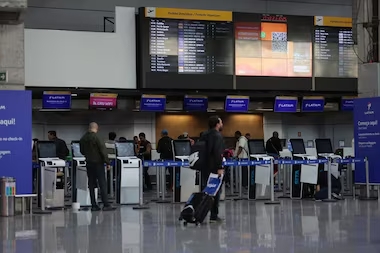
The availability of 24-hour ATMs varies by airport, but the country’s busiest terminals maintain at least one network operating outside business hours. Knowing the location before landing prevents you from walking around the terminal with luggage while searching for a machine.
Guarulhos International Airport (GRU): Location and available banks
Guarulhos International Airport is Brazil’s largest airport and offers one of the country’s highest concentrations of ATMs. The machines are distributed across the two passenger terminals (T2 and T3), in both departures and arrivals areas.
Banks with a confirmed presence at Guarulhos include Banco do Brasil, Caixa Econômica Federal, Bradesco, Itaú and Santander, as well as Banco 24 Horas terminals. For passengers arriving on international flights, machines are available immediately after immigration control in the baggage claim area.
GRU also has currency exchange offices operating in both terminals, which may be a more advantageous alternative than an ATM withdrawal for those who need to convert foreign currency. Confirm currency exchange office hours on the official Guarulhos Airport website, as they may vary by terminal and date.
RIOgaleão – Rio de Janeiro International Airport
RIOgaleão has self-service terminals distributed throughout Terminal 1 and Terminal 2, with machines from Banco do Brasil, Bradesco and the Banco 24 Horas network. According to information released by the airport itself, the terminals operate 24 hours a day and are located in both public areas and restricted departures areas.
For international travelers, RIOgaleão offers currency exchange services and machines that accept Visa, Mastercard, American Express and Diners cards. The exact location can be checked on the RIOgaleão service map before departure.
Belo Horizonte International Airport (Confins)
Tancredo Neves International Airport, in Confins, has ATMs from Banco do Brasil, Caixa Econômica Federal and the Banco 24 Horas network in departures and arrivals areas. The terminals operate extended hours in line with domestic and international flights.
Confins operates flights to international destinations, and the machines in the international arrivals area accept cards issued abroad. According to information from Confins Airport, currency exchange is also available in the terminal, expanding the options for passengers arriving from outside Brazil.
Fortaleza International Airport: Banks and ATMs in the terminal
Pinto Martins International Airport, in Fortaleza, has terminals from Banco do Brasil, Caixa Econômica Federal and Bradesco distributed throughout the domestic and international departures areas. Banco 24 Horas terminals are also available, increasing compatibility with cards from other institutions.
As an airport with significant numbers of foreign tourists, especially Europeans, the Fortaleza terminal has machines that accept international cards and display an English-language interface. The terminal’s currency exchange offices operate during business hours, with reduced availability overnight and on holidays.
| Airport | Available banks | ATM 24h | Accepts international cards |
| Guarulhos (GRU) | BB, CEF, Bradesco, Itaú, Santander | Yes | Yes |
| RIOgaleão (GIG) | BB, Bradesco, Banco 24h | Yes | Yes |
| Confins (CNF) | BB, CEF, Banco 24h | Yes | Yes |
| Fortaleza (FOR) | BB, CEF, Bradesco, Banco 24h | Yes | Yes |
| Salvador (SSA) | BB, CEF, Banco 24h | Yes | Yes |
| Porto Alegre (POA) | BB, CEF, Bradesco, Banco 24h | Yes | Yes |
Premium banking services available at Brazilian airports
Self-service terminals at Brazilian airports have expanded beyond simple withdrawals in recent years. Today, many machines offer a range of transactions that once required visiting a bank branch, making airport ATMs more useful than they may initially seem.
Which services besides withdrawals are available at airport ATMs?
In addition to withdrawals, ATMs at Brazilian airports usually offer balance inquiries, statements, bill payments, mobile phone top-ups and, at some terminals, account deposits.
For domestic travelers, the ability to pay bills or top up a mobile phone directly at an airport ATM can be useful before a long flight. Some Banco do Brasil and Caixa Econômica Federal terminals also allow transfers between accounts at the same institution.
Premium account holders or travelers with high-tier credit cards have access to airport lounges at some airports, but this service is managed by the card networks (such as Visa Infinite and Mastercard Black), not directly by the banks. Check your card benefits before traveling to learn which lounges you can access at no additional cost.
Fees and charges: How much does it cost to use an airport ATM?
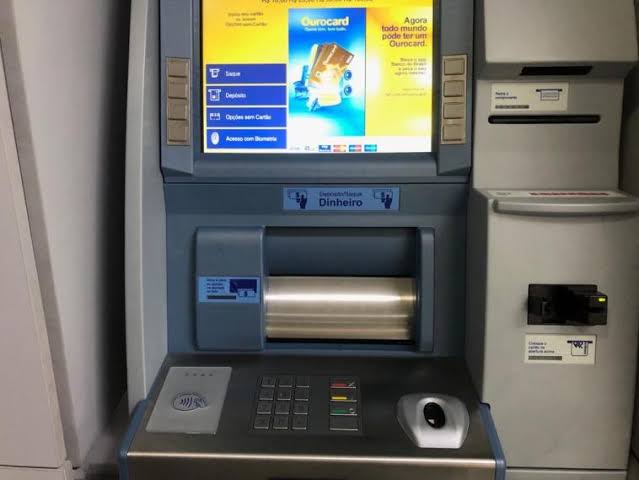
The cost of withdrawing cash from an airport ATM depends on three main factors: the card-issuing bank, the terminal network and the type of transaction. In general, fees are higher than at terminals installed inside bank branches outside airports.
Why might airport ATMs charge higher fees?
Airport ATMs pay higher rental costs and operate as a high-convenience service, which is reflected in withdrawal fees, especially for non-account holders and international card users.
For cards issued in Brazil, withdrawal fees at another bank’s network usually range from R$ 6.00 to R$ 15.00 per transaction, depending on the issuing bank and terminal network. International cards are also subject to IOF of 1.1% on the converted amount and the exchange rate applied by the issuing bank abroad.
The airport ATM business model prioritizes convenience over cost. This is not necessarily a bad thing: anyone who needs cash at 3 a.m. in an airport terminal has exactly that available. The problem arises when a traveler uses an airport ATM without comparing the alternatives available at the destination.
| Transaction type | Estimated fee | Note |
| Withdrawal using a card from the same bank | R$ 0 to R$ 5 | Depends on the account plan |
| Withdrawal using a card from another Brazilian bank | R$ 6 to R$ 15 | Network fee |
| Withdrawal using an international card | R$ 6 to R$ 20 + IOF | Exchange rate from the issuing bank |
| Balance inquiry | R$ 0 to R$ 3 | Varies by network |
How to avoid excessive fees when withdrawing cash at airport terminals
The most effective way to reduce the cost of airport withdrawals is to use a machine operated by the institution where you have an account. Banco do Brasil account holders withdraw cash without a fee at the bank’s terminals; the same applies to Caixa Econômica Federal account holders and customers of other banks with a presence in the terminal.
For foreign tourists, the most economical alternative is usually an international card with zero IOF and no withdrawal fee, available from some fintechs and digital banks. Ask your bank before traveling to understand the applicable fees and whether there is a daily limit for fee-free withdrawals.
● Research which banks have ATMs at your destination airport before boarding.
● Prefer withdrawing a larger amount at once to spread the fixed fee over the transaction.
● Avoid withdrawing foreign currency from an airport ATM when a currency exchange office is available in the same terminal.
● Confirm your card’s daily withdrawal limit before arriving at the airport.
● Never accept the conversion option offered by a foreign ATM (DCC); always choose the local currency.
Safety tips for using ATMs at Brazilian airport terminals
Brazilian airports have continuous camera monitoring and private security, which makes ATMs in these terminals relatively safe compared with machines on streets or in businesses. Even so, some basic precautions make a difference.
What precautions should I take when withdrawing cash from airport ATMs?
Even in monitored environments such as airports, cover the keypad when entering your PIN, check whether any suspicious device is attached to the machine and put away your cash before leaving the terminal.
Skimming devices (devices installed on card readers to capture data) are less common at airports than at street ATMs, but they are not impossible. Prefer machines installed inside enclosed booths or directly into terminal walls, and avoid machines in places that are difficult to see.
● Do not accept help from strangers when using an ATM.
● Check that the card reader is firmly attached before inserting your card.
● Put away your card and cash before stepping away from the machine.
● Prefer to use the machine when the terminal is busier.
● Report any suspicious transaction directly to airport security.
● If the machine retains your card, contact the bank immediately using the telephone number on the back of the card.
Brasil ATM works to keep its content accurate and up to date. Even so, operating hours, network availability, fees and terminal locations may be changed by the responsible parties without notice. We recommend checking official airport and bank channels before traveling.
Alternatives to airport ATMs: Other ways to have money during your trip
An airport ATM is a convenient solution, but it is not the only option available to travelers who need cash or access to financial resources upon arriving in Brazil. Knowing the alternatives helps you make a more advantageous decision according to your traveler profile and destination.
Can prepaid cards and digital wallets replace an airport ATM?
For expenses at businesses that accept cards, yes. For cash, not completely: prepaid cards allow withdrawals from compatible machines, but they do not eliminate the need for an available terminal.
Foreign-currency prepaid cards are a popular option among foreign tourists visiting Brazil. They allow users to load an amount in Brazilian reais or another currency before the trip, with exchange rates locked in advance. ATM withdrawals with these cards follow the same rules as conventional debit cards.
Digital wallets such as Google Pay, Apple Pay and wallets from Brazilian fintechs (such as Nubank and Mercado Pago) work well at businesses with NFC card terminals, but they still do not replace cash at fairs, markets, informal transportation services and small local businesses. PIX is also widely accepted in Brazil, and many businesses prefer this payment method to cards.
Withdrawing before traveling or at the destination airport: Which is more worthwhile?
Withdrawing before traveling, at a branch of your bank or a trusted currency exchange office, is usually cheaper than withdrawing at the destination airport. The difference in fees may be significant for anyone withdrawing larger amounts.
For domestic travelers moving between Brazilian cities, withdrawing cash in the city of origin before boarding is the lowest-cost option, especially if the traveler’s bank does not have terminals at the destination airport. For smaller or emergency withdrawals, an airport ATM serves the purpose well.
Foreign tourists arriving in Brazil have three main options: use an airport ATM with an international card, use the terminal’s currency exchange office or use a prepaid card loaded with Brazilian reais before the trip.
Combining a card with favorable international terms and a small cash reserve is the most practical balance for most traveler profiles.
| Option | Cost | Convenience | Recommended for |
| Airport ATM | Medium to high | High | Emergencies and small amounts |
| Withdrawal before traveling | Low | Medium | Those who plan ahead |
| Airport currency exchange office | Medium | High | Foreign currency conversion |
| Prepaid card | Variable | High | Foreign tourists |
| PIX / digital card | Low | High | Destinations with good digital coverage |
Conclusion
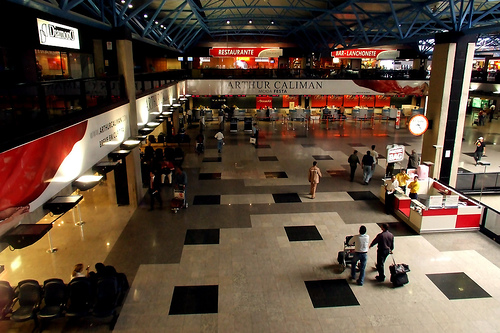
Finding an ATM at a Brazilian airport is feasible at most major terminals, with networks such as Banco do Brasil, Caixa Econômica Federal and Banco 24 Horas covering the main destinations. The convenience is there, but transaction costs are usually higher than at bank branches outside the terminal.
Planning ahead, knowing your card’s fees and knowing where compatible terminals are located make a real difference to how much you will spend.
Brasil ATM brings together practical information about destinations, services and travel planning to help you travel more safely and economically. Continue exploring the portal to discover itineraries, transportation tips, accommodation and much more about the Brazilian destinations on your next itinerary.
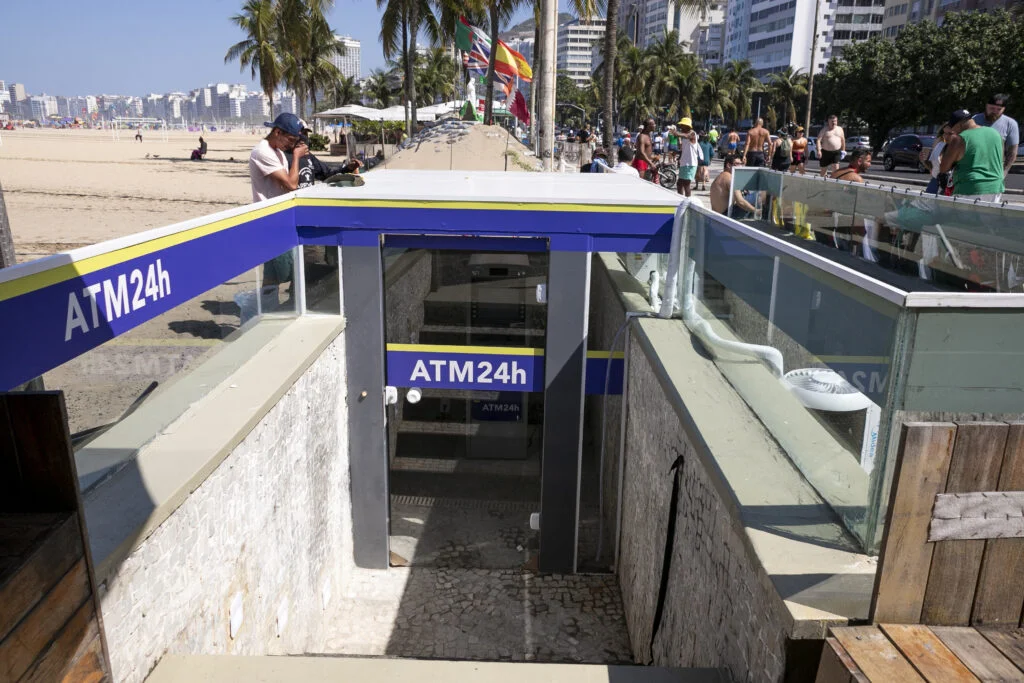
Where to withdraw cash from ATM24h machines in Brazil
To make the most of your Curitiba itinerary, it is best to carry cash. This helps ensure a smooth and enjoyable experience. In some places, cash is essential for food, transportation, attraction tickets and more.
See the table below with some ATM24h machines in the areas mentioned in this article:
| Where | Location |
| Curitiba International Airport | See all locations here |
| Guarulhos International Airport | See all locations here |
| Rio de Janeiro International Airport | See all locations here |
| Santos Dumont Airport | See all locations here |
Discover Brasil ATM
At Brasil ATM, we see Brazil as a place filled with unique beauty and fascinating culture. Our portal, supported by the global ATM24h brand, reflects our love for Brazil. Our goal is to inspire tourists to explore its wonders safely and with reliable information.
We provide accurate, up-to-date and inspiring information in three languages. With us, you will have everything you need to plan your trip with confidence. We offer travel guides, detailed itineraries and useful planning tips.
We want to create lasting memories. We will show you Brazil’s natural and cultural beauty. Explore famous destinations such as Rio de Janeiro and São Paulo, and discover hidden gems such as Lençóis Maranhenses and Fernando de Noronha. We are here to help you make the most of your trip.
You may also like to read:
- Best restaurants in Curitiba: Guide to fine dining, local cuisine and tips
- 5-star hotels in Curitiba: Complete guide to the best options
- 4-star hotels in Curitiba: The best
- 3-star hotels in Curitiba: Guide to choosing safely
Frequently asked questions
Yes, most terminals at major Brazilian airports accept international Visa, Mastercard and American Express cards. Compatibility may be more limited at smaller airports. Always check whether the terminal displays your card network’s symbol before inserting your card.
Yes, Brazil’s main airports, such as Guarulhos, RIOgaleão, Confins, Fortaleza, Salvador and Porto Alegre, have terminals operating 24 hours a day. Availability may be more limited at regional airports, and opening hours vary according to flight traffic.
Banco do Brasil, Caixa Econômica Federal and the Banco 24 Horas network have the broadest presence at the country’s airports. The Banco 24 Horas network is interoperable, meaning that it allows withdrawals using cards from different banks at a single terminal.
For cards from other Brazilian banks, withdrawal fees usually range from R$ 6.00 to R$ 15.00. For international cards, IOF of 1.1% and the issuing bank’s exchange rate are added. Withdrawals from your own bank’s network may be free, depending on your account plan.
DCC (Dynamic Currency Conversion) is the currency conversion offered by the terminal itself when you use a foreign card. It converts the amount into your country’s currency at generally unfavorable rates. Always choose to pay or withdraw in the local currency (Brazilian reais), leaving the conversion to your card-issuing bank.