








Curitiba brings together more than 30 urban parks, nationally renowned museums and a historic center rich in culture and gastronomy. What to see in Curitiba includes the Botanical Garden, the Ópera de Arame, the Oscar Niemeyer Museum and the Largo da Ordem Fair, with many free or low-cost attractions.
Curitiba tends to surprise those who don’t know it yet. The capital of Paraná has one of the highest densities of green areas among Brazilian capitals and a tourist infrastructure that makes getting around a lot easier, especially for those planning their first visit. If you want to know what to see in Curitiba without wasting time or money, you’ve come to the right place.
The city offers everything from parks with preserved fauna and flora to theaters with award-winning architecture, street fairs, gastronomic markets and museums that are among the most visited in Paraná. Most of the attractions are concentrated in regions well connected by public transport, which makes the visit accessible for different traveler profiles.
Brasil ATM’s editorial team mapped the city’s main attractions based on information verified with official sources, such as Curitiba Municipal Tourism Institute and the Curitiba City Hall. Throughout this content, you will find itineraries organized by day, tips for saving money, comparisons between attractions and everything you need to get to Curitiba with the planning in mind.
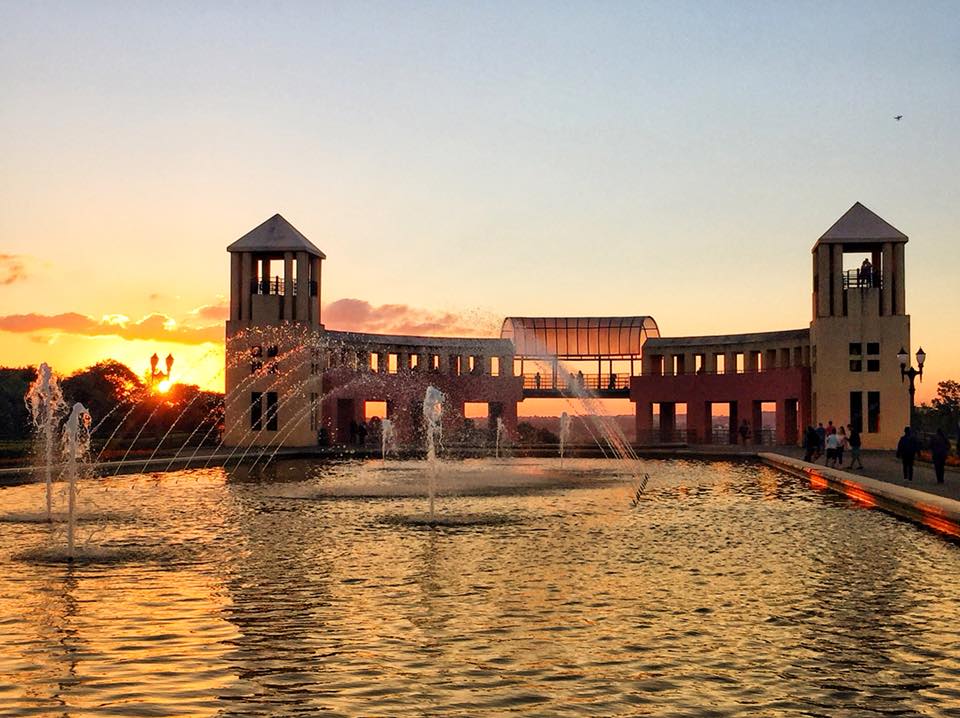
What to see in Curitiba: the unmissable tourist attractions in the capital of Paraná
Curitiba concentrates its main attractions along well-defined axes: urban parks, modern cultural facilities and a compact historic center that can be explored on foot. Most tourist attractions are free or charge affordable entrance fees, which makes the city one of the most democratic options for tourism in the South of Brazil.
How many days are enough to visit Curitiba?
Two days are enough to cover the city’s main attractions. With three days, you can include a day trip, like the train to Morretes, without giving up the central points.
With one day available, you can visit the Botanical Garden, the Ópera de Arame and pass through the historic center. Most of the attractions are in regions accessible by the Linha Turismo, a circular bus that connects the main points of the city.
Those who have two days have time to add the Oscar Niemeyer Museum, Barigui Park and the Largo da Ordem Fair, which takes place on Sundays. With three days or more, the itinerary expands to the surrounding area, including historic cities in the Metropolitan Region.
What is the best time of year to visit Curitiba?
Spring and autumn are the most pleasant seasons to visit Curitiba, with mild temperatures and less rainfall. Summer can bring afternoon rain showers, while winter is cold and, in some years, experiences frost.
Curitiba has a subtropical climate with temperatures that vary greatly throughout the year. In winter, between June and August, the thermometer can drop below 5°C, which requires clothing planning. Summer, between December and February, has averages of around 22°C, but with frequent rain in the late afternoon.
The period from September to November is usually the most balanced: sunny days, temperatures between 15°C and 25°C and less chance of prolonged rain. The month of July, despite the cold, attracts those who want to experience Curitiba’s winter, as the city has a good structure for the season.
Parks and green areas that you cannot miss in Curitiba
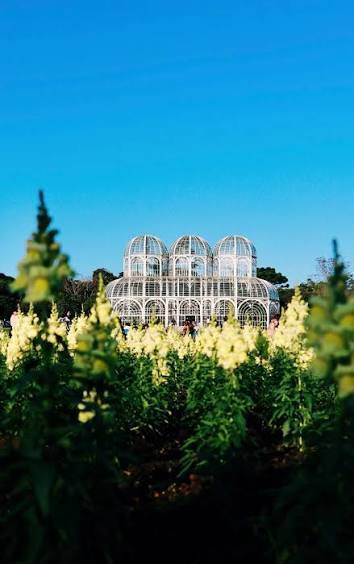
Curitiba has more than 30 public urban parks, according to data from Curitiba City Hall, which places the city among the Brazilian capitals with the largest green area per inhabitant. Strolling through the parks is, for many visitors, the best way to understand what makes Curitiba different from other capitals in the country.
Entry to most parks is free, and they are open every day of the week, generally from 6am to 9pm. Check out the main ones.
Botanical Garden and Glass Greenhouse: the city’s postcard
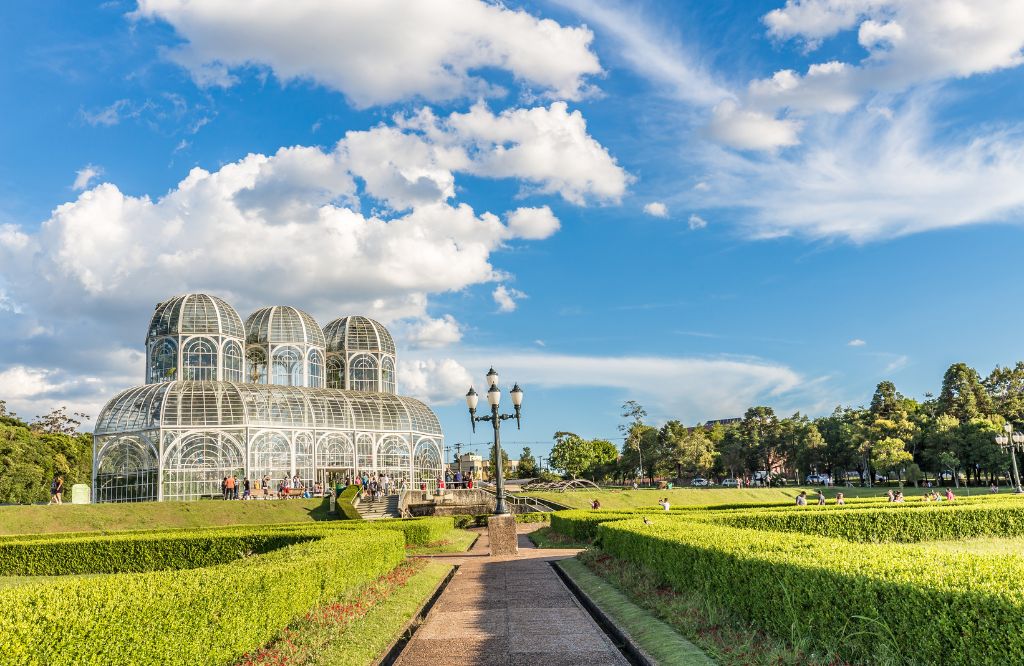
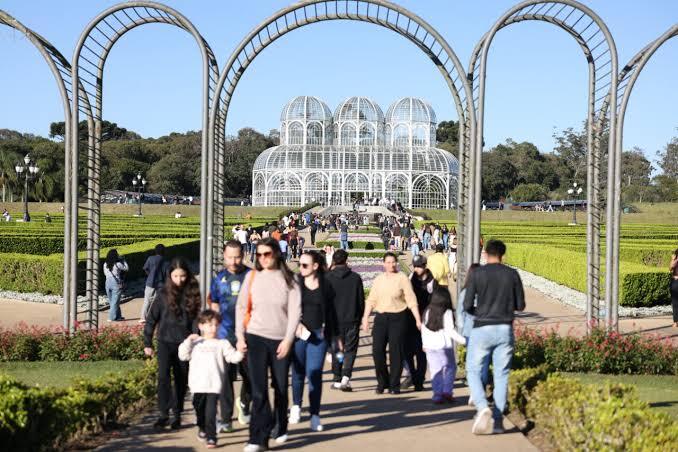
The Fanchette Rischbieter Botanical Garden is the most photographed tourist spot in Curitiba and one of the images most associated with the city in Brazil. The iron and glass greenhouse, inspired by London’s Crystal Palace, houses tropical and subtropical plants and is open to the public with no entry fee.
The park occupies 278,000 m² in the Jardim Botânico neighborhood and has French-style formal gardens, tree-lined trails and a botanical museum. The space receives visitors every day, including holidays, from 6 am to 9:30 pm. On weekends, a crafts fair takes place outside, expanding the tour options.
For those who want to buy tickets for guided tours of the Botanical Garden or other Curitiba attractions in advance, the GetYourGuide offers a selection of tours and experiences with reviews from other travelers.
Barigui Park: where are Curitiba’s famous capybaras?
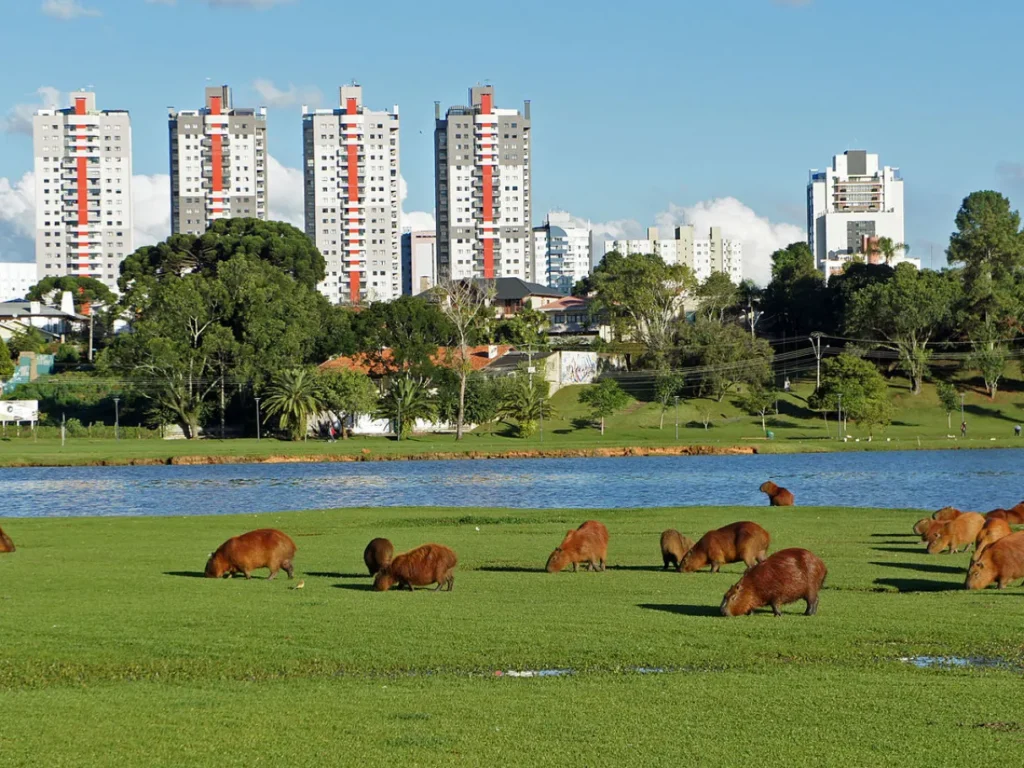
The capybaras of Barigui Park live freely on the banks of the park’s central lake, close to the main entrance. It is common to see them throughout the day, especially in the morning and late afternoon.
Parque Barigui is located in the Santo Inácio neighborhood and is one of the largest urban parks in Curitiba, with an area of 1.4 million m². In addition to the capybaras, the park has walking and cycling trails, a fishing lake, sports courts, a picnic area and an automobile museum.
Entrance is free and the park is open from 6am to 9pm every day. On weekends, the movement is greater and it is possible to rent bicycles in the internal area. It’s a good choice for families with children or anyone who wants a trip outdoors without spending anything.
Tanguá Park: viewpoints and waterfalls in the heart of the city
Parque Tanguá is located in the Taboão neighborhood and occupies an old deactivated quarry, which gave the space a different topography than most parks in Curitiba. The highlight is the two artificial lakes connected by an artificial waterfall about 27 meters high, visible from the upper viewpoint.
The park has a tunnel that crosses the rock and connects the two lakes, as well as a bike path, leisure area and restaurant with views of the complex. Entrance is free, and opening hours follow the standard for municipal parks: from 6am to 9pm.
The view from the viewpoint is one of the best angles for photographing the park’s landscape, especially in the late afternoon, when the natural light enhances the colors of the vegetation around the lakes.
Bosque Alemão: culture and nature in one tour
Bosque Alemão, in the Vista Alegre neighborhood, was created in honor of German immigration to Paraná and combines nature with cultural references. The space has a themed trail based on the Brothers Grimm story Little Red Riding Hood, with sculptures and scenes along the route, which makes the tour especially attractive for children.
Inside the forest there is a wooden observation tower, the Forest House and a prayer house built by German immigrants. The trail is short and quiet, approximately 1 km long, suitable for easy walking.
Entry is free and the forest is open daily from 6am to 8pm. The combination of dense vegetation, themed sculptures and historic architecture makes the place one of the most complete cultural attractions among the city’s parks.
Unmissable cultural and architectural attractions in Curitiba
Curitiba has an architectural production recognized nationally and internationally, with works ranging from Oscar Niemeyer’s modernism to constructions that integrate nature and engineering. The city’s main cultural attractions are distributed across different neighborhoods, but most are accessible via the Linha Turismo.
Ópera de Arame: what is it like to visit the most famous theater in Paraná?
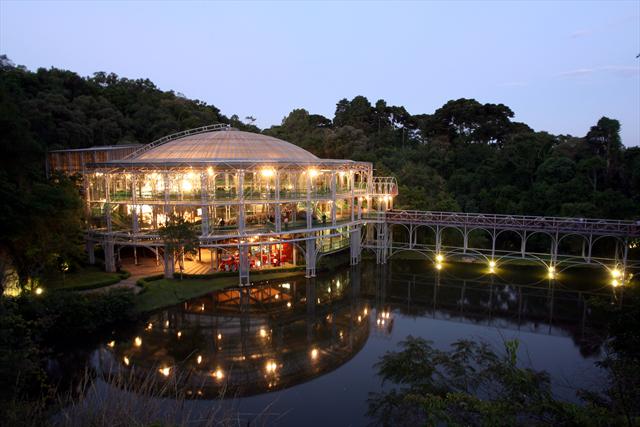
The Wire Opera is a theater with a transparent metal structure located in a deactivated quarry, surrounded by a lake and vegetation. Visiting the external area is free; Access to the interior depends on the show schedule.
Opened in 1992, Ópera de Arame is one of the most recognized projects in Curitiba architecture. The structure made of steel tubes and translucent roof was built in just 75 days and has capacity for 1,550 spectators.
The architectural complex, with the lake around it and the preserved forest, forms a setting that is worth a visit even outside of show days.
The theater is in the Abranches neighborhood and is one of the stops on the Tourism Line. To check the show schedule and buy tickets in advance, GetYourGuide It can be a good option for those who plan their agenda in time.
Oscar Niemeyer Museum: a dive into Brazilian modernism
The Oscar Niemeyer Museum, known as MON, is the largest visual arts museum in Latin America in terms of built area, according to the Curitiba Municipal Tourism Institute. The main building, called the Eye due to its irregular shape, is a work by Niemeyer himself and is, in itself, a reference of Brazilian modernist architecture.
The museum is located in the Centro Cívico neighborhood and has a permanent collection with works by Niemeyer, as well as temporary exhibitions of art, architecture and design that are renewed throughout the year. Opening hours are from Tuesday to Sunday, from 10 am to 6 pm, with an entrance fee.
Students, elderly people and people with disabilities are entitled to a discount or exemption, according to current rules.
The museum’s external area, with water mirrors and landscaping, can be visited free of charge. Before going, it is worth confirming the time and updated prices directly on the website. MON official website, as these data may be changed without prior notice.
Panoramic Tower: what view do you have from the top of Curitiba?
From the top of the Panorâmica Tower, 109 meters high, you have a 360-degree view of the city, highlighting the flat horizon and the parks that dot Curitiba’s urban fabric.
The tower is located in the Centro Cívico neighborhood and is integrated into the Paraná Government Complex. The external viewpoint offers a different perspective from what you have in the parks: from there, you can see the extent of the city’s green areas and identify regions such as the Historic Center and the Historic Sector.
Visiting the viewpoint has an entrance fee and operates at specific times. The most up-to-date information on values and operation is available at Curitiba City Hall. It’s an attraction that takes up little time and can easily be combined with a visit to MON, which is just a few minutes’ walk away.
Curitiba’s historic center: what to explore on foot

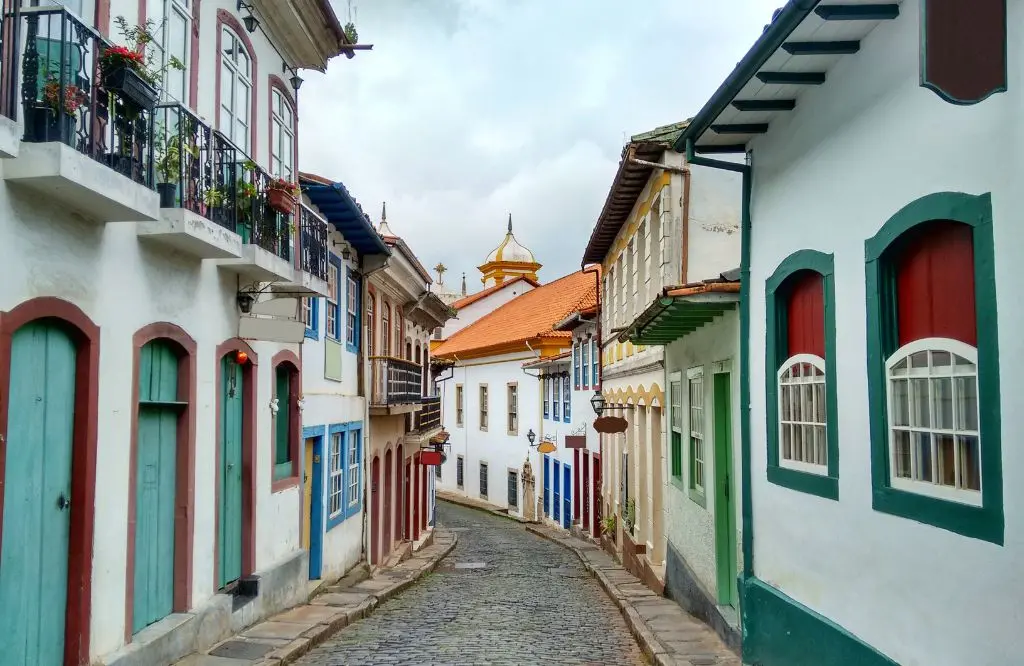
The historic center of Curitiba brings together some of the city’s main cultural and gastronomic landmarks within a radius that can be covered without rushing in two to three hours. The region is compact, with sidewalks and cobblestone streets that make walking easy, and has food options, shops and historical attractions along the route.
Rua XV de Novembro and the pedestrian mall
Rua XV de Novembro was the first pedestrian mall in Brazil, opened in 1972, and continues to be the busiest commercial corridor in the center of Curitiba. The stretch between Praça Osório and Praça Santos Andrade is popularly called Calçadão das Flores, because of the gardens and flowerbeds that decorate the space.
Along the street, you will find shops, cafes, banks and newsstands, as well as some historical points such as the Rosário Church and the Paraná Commercial Association building. The boardwalk is a good starting point for exploring the center on foot, especially for those arriving from smaller cities and wanting to feel the urban rhythm of Curitiba.
The area is busy on weekdays and quieter on weekends, when most businesses close. For those planning a visit to the center on a Sunday, it is best to combine the trip with the Largo da Ordem Fair, which takes place nearby.
Largo da Ordem Fair: when does it take place and what to find?
The Largo da Ordem Fair takes place every Sunday, from 9am to 2pm, in the Historic Sector of Curitiba. There you will find local crafts, antiques, typical Paraná food and cultural presentations.
The fair is one of the most traditional programs in the city and brings together more than 1,200 exhibitors, according to Curitiba City Hall. The route passes through Largo da Ordem, the Church of the Third Order of São Francisco das Chagas and cobblestone streets that make up the architectural complex of the Historic Sector.
In addition to the craft stalls, the fair has food options such as barreado, pierogi and other typical dishes from Paraná cuisine. It is one of the most vivid moments of Curitiba culture and an attraction that pleases both those looking for regional products and those who just want to stroll around and get to know the city in more depth.
Municipal Market: gastronomy and typical products from Paraná
The Curitiba Municipal Market is close to Largo da Ordem and is open from Monday to Saturday, from 7am to 6pm, and on Sundays from 7am to 1pm. The space brings together stallholders who sell spices, sausages, cheeses, seasonings, yerba mate and agricultural products from Paraná.
Gastronomy is the main attraction of the market. You can have a chimarrão, try the barreado served in individual portions or try cooked pine nuts in the winter months, when the product is in harvest. The environment is busy and preserves the character of popular commerce that characterizes municipal markets in southern Brazil.
The Municipal Market is a good stop for those who want to take gastronomic souvenirs from Curitiba, such as selected yerba mate, artisanal jellies and cured cheeses from the region. The price of products is usually more affordable than in tourist stores, but it’s worth researching the stalls before buying.
Curitiba Zoo and other attractions for families with children
Curitiba has a series of attractions designed for children, and the Municipal Zoo is the most popular among families visiting the city. The city’s public structure, with tree-lined parks and safe spaces for movement, also favors peaceful walks with young children.
Is the Curitiba Zoo worth a visit?
The Curitiba Zoo is worth a visit, especially for families with children. The space houses more than 1,000 animals from around 130 species, has free entry and is open from Tuesday to Sunday.
The Municipal Zoo is located in the Cajuru neighborhood, integrated into the Iguaçu Regional Park, and is one of the largest urban zoos in southern Brazil. The surrounding park has lakes, trails and picnic areas that complement the tour, making the day more complete for those going with the family.
Opening hours are from Tuesday to Sunday, from 8am to 5:30pm, with entry closing at 4:30pm. Entry is free for all audiences, with no age restrictions. To ensure that visiting hours and conditions are up to date before you go, we recommend checking the official website of the Curitiba Zoo.
For those traveling with children and prefer accommodation with more space, the Vrbo offers apartments and holiday homes in Curitiba, a practical alternative to conventional hotels when the group is larger.
Day trips from Curitiba: the best excursions nearby

Curitiba’s geographical position is one of its tourist assets: the city is less than 100 km from historical destinations, mountains with expressive landscapes and colonial cities that preserve the architecture and customs of the first European settlers of Paraná.
Train to Morretes: how does it work and why is it worth it?
The train to Morretes leaves from the Curitiba Railway Station and travels around 110 km to Morretes, descending the Serra do Mar with views of the Atlantic forest, historic viaducts and waterfalls. The journey takes approximately 3 hours and is operated by Serra Verde Express.
The train trip to Morretes is one of the most popular trips for those in Curitiba with at least two days of travel. The route crosses the Serra do Mar in Paraná and passes through sections of preserved Atlantic Forest, historic bridges and natural viewpoints, with photographic stops along the way.
In Morretes, the typical dish is barreado, a meat stew cooked slowly in a clay pot, served with cassava flour and banana. The return can be done by bus via Estrada da Graciosa, which has a different and equally expressive landscape. It’s important to book tickets in advance, especially in high demand seasons. A GetYourGuide list of tours organized for this trip, departing from Curitiba and guide included.
Other cities close to Curitiba for a day trip
In addition to Morretes, the Metropolitan Region and the surrounding area of Curitiba offer other destinations that fit within a day trip. Antonina, about 90 km away, is a historic city listed by IPHAN, with colonial mansions and Antonina Bay.
Paranaguá, 90 km away via Estrada da Graciosa or 80 km via highway, has the second largest port in Brazil and a historic center with 17th century churches.
For those who prefer the mountain route, São Luís do Purunã, in the Campos Gerais region, offers open countryside landscapes, waterfalls and trails with views of the second plateau of Paraná. Access is via BR-277, approximately 80 km away from the capital.
| Destiny | Distance from Curitiba | Travel time | Featured |
| Morretes | 70km | ~3h (train) | Barreado and Serra do Mar |
| Antonina | 90 km | ~1h30 (car) | Historic center listed |
| Paranaguá | 90km | ~1h30 (car) | Port and colonial churches |
| São Luís do Purunã | 80 km | ~1h (car) | Campos Gerais and waterfalls |
Curitiba itinerary by days: how to organize your trip
Curitiba has a good tourist transport infrastructure, which makes organizing your itinerary much easier. The Tourism Line, a circular bus operated by the city hall, connects 25 tourist attractions with a single daily ticket, which reduces the need for a taxi or app to cover the main attractions.
1-day itinerary in Curitiba: the essentials for those who have little time
With a single day in Curitiba, the ideal is to prioritize the most representative attractions that are close to each other. A practical suggestion starts at the Botanical Garden first thing in the morning, when there is less movement and the natural light favors photos of the greenhouse.
After the Botanical Garden, the itinerary continues to the Ópera de Arame, with time to explore the surroundings and photograph the architectural complex. In the afternoon, a visit to the historic center, stopping at Rua XV de Novembro and the Historic Sector, puts a good end to a busy day.
If the visit falls on a Sunday, the Largo da Ordem Fair can replace the walk through the center in the morning, bringing together gastronomy, crafts and culture in one place. In total, this itinerary can be completed in 8 to 9 hours, without rushing.
2-day itinerary in Curitiba: combining parks, culture and gastronomy
On the second day, you can explore attractions that require more time or are in different regions than the first day. A good idea is to start at the Oscar Niemeyer Museum right when it opens, at 10 am, and then visit the Panorâmica Tower, which is just a few minutes walk away.
In the afternoon, Barigui Park is a peaceful option for walking, watching the capybaras and resting in one of the leisure areas. Those who prefer to expand their cultural repertoire can end the day at Bosque Alemão, with a short trail and different scenery from other parks.
On both days, the Municipal Market can be included in one morning as a starting point, with breakfast or a snack among the stalls selling regional products. This helps give the trip a more local rhythm.
3-day itinerary in Curitiba: how to make the most of the capital of Paraná?
With three days in Curitiba, you cover the city’s main attractions in the first two days and reserve the third for the train ride to Morretes, which is one of the most talked about in Paraná and worth the experience.
The train to Morretes leaves early in the morning and returns usually in the early afternoon, which leaves the end of the day free to explore some attraction that was left out of the previous itinerary, such as Parque Tanguá or the Municipal Zoo.
For those who have more than three days, other parks such as Parque das Pedreiras, Parque Tingui and Bosque de Portugal offer additional options with no entry cost. The city has more than three days of programs for those who enjoy outdoor spaces and culture.
Practical tips to enjoy Curitiba while spending little
Curitiba is one of the Brazilian capitals with the best cost-benefit ratio for tourism. Most of the most popular attractions are free, and the public transport system makes it easy to travel between tourist attractions without relying on apps or taxis for each route.
Which attractions in Curitiba are free or almost free?
Most parks and some of Curitiba’s main cultural attractions do not charge entry. Among the free spots are the Botanical Garden, Barigui Park, Tanguá Park, Bosque Alemão, Municipal Zoo, Ópera de Arame (outside area) and Largo da Ordem Fair.
- Barigui Park: free, every day
- Tanguá Park: free, every day
- German Forest: free, every day
- Municipal Zoo: free, Tuesday to Sunday
- Opera de Arame (outside area): free
- Largo da Ordem Fair: free (Sunday, from 9am to 2pm)
- Historic Sector and Rua XV de Novembro: free
Attractions with a fee include the Oscar Niemeyer Museum, the Panoramic Tower and the train to Morretes. The Linha Turismo ticket is also paid, but covers 25 tourist attractions with a single daily fare, which represents a good saving compared to using transport apps for the same itinerary.
How to get around Curitiba: public transport, taxis and apps
Curitiba has a public transport system recognized for the design of its tube stations and bi-articulated buses. For tourists, the most practical option is the Linha Turismo, a circular bus that leaves from Praça Tiradentes and connects the main tourist attractions. The ticket is sold on the bus itself and allows embarkation and disembarkation throughout the day.
For more specific trips, such as the Zoo or neighborhoods far from the center, the urban mobility application may be more efficient. Curitiba has Uber coverage and other transport applications throughout the urban area.
Bicycle rental within the parks is an occasional option, but the city also has shared bicycle stations in some parts of the center and the Batel neighborhood. For those who prefer to discover Curitiba at their own pace, some companies offer bicycle tours through the historic center and the main parks, with a guide and equipment included. You can find these options in GetYourGuide.
Brasil ATM works to keep its content always up to date and accurate. Even so, opening hours, tariffs, visiting rules and other information may be changed by those responsible without prior notice. We always recommend checking official channels before traveling.
Conclusion
Curitiba has a volume of free attractions and tourist infrastructure that few Brazilian destinations offer in the same concentration. The parks, the Botanical Garden, the Ópera de Arame, the Oscar Niemeyer Museum and the historic center form a group that comfortably takes up two days of visiting, with space to include gastronomy, culture and outdoor walks without the pressure of your schedule.
To continue planning your trip to Paraná, explore Brasil ATM’s other content about destinations in the South of Brazil. If you already know you are going to Curitiba, book your accommodation in advance via Booking and guarantee the best location and price options. For tours and tours, the GetYourGuide has a selection of experiences in Curitiba with reviews from other travelers to help you choose.
Where to withdraw money from ATM24h tellers in Brazil
To make the most of your Curitiba itinerary, it’s best to bring cash. This guarantees a smooth and incredible experience. In some places, money is essential for food, transportation, tickets to attractions and more.
Check out the table below with some 24-hour ATM machines in the regions mentioned in this article:
| Where | Location |
| Curitiba International Airport | See all the points here |
| Jockey Plaza Shopping Center | See all the points here |
| Pestana Curitiba | See all the points here |
| NH Curitiba The Five | See all the points here |
Discover Brasil ATM
No Brasil ATM, we see Brazil as a place full of unique beauty and fascinating culture. Our portal, supported by the global brand ATM24h, reflects our love for Brazil. Our goal is to inspire tourists to explore its wonders in a safe and informed way.
We provide accurate, up-to-date and inspiring information in three languages. With us, you’ll have everything you need to plan your trip with confidence. We offer travel guides, detailed itineraries and helpful planning tips.
We want to create memories that last and will show you the natural and cultural beauty of Brazil. Explore famous destinations like Rio de Janeiro and São Paulo, and discover hidden gems like Lençóis Maranhenses and Fernando de Noronha. We’re here to help you make the most of your trip.

You may also like to read:
- Travel insurance for Curitiba: What it covers and how to get it
- Curitiba Airport (CWB): Complete Guide to Afonso Pena
- How to withdraw money in Curitiba: Practical guide for tourists
- Best time to visit Curitiba: Climate, events, and when to go
FAQ
With a day in Curitiba, prioritize the Botanical Garden in the morning, the Ópera de Arame in the middle of the day and the Historic Sector with Rua XV de Novembro in the afternoon. If the visit is on a Sunday, the Largo da Ordem Fair can replace part of the center’s itinerary.
Curitiba is a plateau capital and has no beach. The nearest beach is Guaratuba, approximately 110 km away, and Pontal do Paraná, approximately 100 km away. Paranaguá, a historic coastal city, is 90 km away and can be visited in a day trip.
The Tourism Line is worth it for those who are going to visit several tourist attractions in the same day. The daily ticket covers 25 attractions with free pick-up and drop-off, which is more economical than using transport apps for each route.
The Largo da Ordem Fair takes place every Sunday, from 9am to 2pm, in the Historic Sector of Curitiba. The event brings together crafts, antiques, typical Paraná cuisine and cultural presentations along the historic route.
Curitiba has a moderate cost for tourism. Most of the main attractions are free, and public transport covers the sights well. Food and accommodation vary greatly depending on the neighborhood and profile chosen, but there are affordable options for different budgets.