








Curitiba is safe compared to other Brazilian capitals. According to the Brazilian Yearbook of Public Security, the city records homicide rates below the national average and is among the capitals with the best perception of security. Tourists can visit the main spots with peace of mind, provided they adopt basic precautions recommended for any large city.
Planning a trip to Curitiba and wondering if the city is safe is natural, especially for those who have never visited the capital of Paraná. The good news is that Curitiba is safe compared to other capitals in the country, with violence rates below the national average and an urban structure that favors the safe movement of tourists and residents.
This does not mean the city is risk-free. As in any metropolis, there are areas that require more attention and situations that can be avoided with planning. The editorial team at Brasil ATM monitors official security data and cross-references this information with the reality of tourism in Curitiba to offer a balanced and updated view of the topic.
Throughout this content, you will find verified data, a neighborhood-by-neighborhood analysis, practical guidelines for tourists, and an honest comparison with other Brazilian capitals. The goal is to help you make an informed decision about visiting or moving to Curitiba, without alarmism and without omitting what is relevant to know.

Is Curitiba safe? A direct answer for those who want to visit or live in the city
Curitiba is safe for most profiles of visitors and residents when compared to the scenario of Brazilian capitals. The city holds favorable positions in the country’s main public security indices and has an urban infrastructure that contributes to a feeling of tranquility in a large part of the territory.
How Curitiba ranks in security among Brazilian capitals
Among the 26 Brazilian state capitals, Curitiba consistently ranks among those with the lowest rates of homicide and violent crime. According to the Brazilian Yearbook of Public Security, Paraná has mortality rates from violent causes below the national average, and Curitiba drives this positive result within the state.
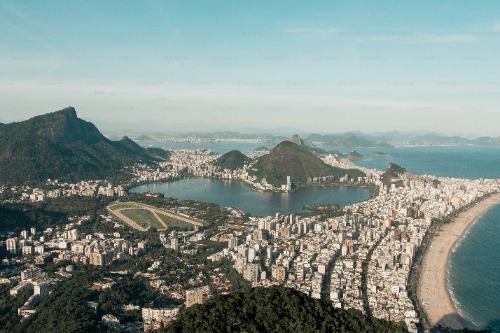
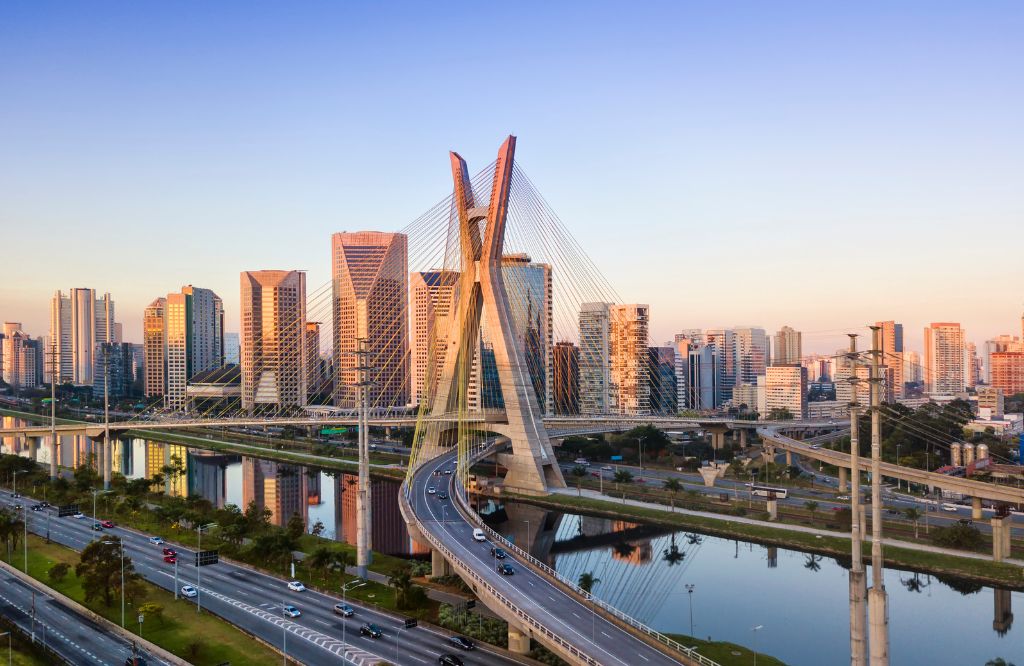
The city also stands out for its ostensive policing and the presence of monitoring cameras in central and tourist areas. These combined factors create a more controlled environment compared to São Paulo, Rio de Janeiro, Fortaleza, or Belém, which historically record higher rates of urban violence.
This does not mean that Curitiba is perfect or that crime is non-existent. What the data shows is that the relative risk is lower, which makes a real difference when planning a trip or a move to the city.
What is the perception of security for those who live in Curitiba on a daily basis?
Those who live in Curitiba generally report a perception of security above the average for large Brazilian cities, especially in planned neighborhoods and in the central and northern regions of the city.
Municipal satisfaction surveys conducted by the City Hall of Curitiba show that residents positively evaluate public lighting, urban cleaning, and the presence of security agents at strategic points. These elements have a direct impact on the feeling of everyday security.
The perception, however, varies greatly by neighborhood. More peripheral regions, especially in the south and southeast of the city, concentrate more incidents and naturally generate greater insecurity among local residents. Those who live in or visit the expanded center and consolidated neighborhoods tend to have a very different experience.
Official public security indices and data in Curitiba
Official security data in Curitiba is monitored by the Public Security Secretariat of Paraná and consolidated annually by the Brazilian Forum of Public Security. These indices allow comparing the city with other capitals and identifying trends over time.
Which indicators show that Curitiba is one of the safest capitals in Brazil?
Curitiba’s homicide rate is lower than the national average and the average of Brazilian capitals, according to the Brazilian Yearbook of Public Security. This is the main indicator used internationally to measure a city’s level of violence.
Other relevant indicators include the rate of robberies against pedestrians, the number of incidents of violence against women, and records of theft on public transport. Curitiba performs relatively favorably in all these fields when compared to capitals of similar size.
The city also has an integrated urban monitoring system, managed by the Municipal Guard of Curitiba, with cameras connected to operational control centers. This system allows for a faster response to incidents in areas with higher circulation.
| Indicator | Curitiba | Average of BR capitals |
|---|---|---|
| Homicide rate (per 100,000 inhab.) | Below average | ~22 (national reference) |
| Presence of camera monitoring | High (center and tourist region) | Variable |
| Ostensive policing at tourist spots | Present | Variable |
| Perception of security by residents | Above average | Variable |
Curitiba was elected the second best Brazilian city: what this title says about security
The ranking prepared by Connected Smart Cities, which evaluates mobility, environment, governance, technology, health, education, and security, positioned Curitiba as the second best city to live in Brazil. Public security is one of the axes evaluated in this methodology.
This recognition reflects the set of investments in urban infrastructure, monitoring systems, and mobility policies that Curitiba has accumulated over decades. The city is frequently cited as a reference for urban planning in Brazil and Latin America.
For the tourist, what this title means in practice is that the city continuously invests in quality of life and security, and that this translates into well-lit sidewalks, structured public transport, and reasonably well-maintained public areas in most of the territory.
Safest neighborhoods in Curitiba for tourists and residents
Security in Curitiba is not uniform throughout the territory, but there are neighborhoods with a consistent history of low crime incidence and good urban infrastructure. For those visiting or intending to live in the city, knowing these regions helps make better choices for accommodation and commuting.
What are the safest neighborhoods in Curitiba?
The safest neighborhoods in Curitiba are concentrated in the central, northern, and northwestern regions of the city, where there is a greater presence of policing, better public lighting, and a lower incidence of violent crimes according to data from the Public Security Secretariat of Paraná.
Among the neighborhoods with the best perception of security and quality of life are:
- Batel;
- Água Verde;
- Bigorrilho (Champagnat);
- Juvevê;
- Mercês;
- Boa Vista;
- Ahú;
- Hugo Lange
These neighborhoods combine good commercial infrastructure, the presence of services, and pedestrian movement throughout the day, factors that contribute to a safer environment in practice.
Boa Vista Neighborhood: what security and quality of life are like in the region
Boa Vista is one of the highest-rated neighborhoods by residents and visitors in Curitiba. Located in the northern region of the city, it combines easy access to the center with a more residential environment, green areas, and a good range of services.
The incidence of violent crimes in Boa Vista is historically low compared to the city average. The neighborhood has quality public lighting, integrated transport through the Biarticulated system, and a routine policing presence on the main roads.
For those visiting Curitiba and wanting accommodation in a quiet area, Boa Vista is an interesting alternative, especially for longer stays or for families who prioritize security and comfort in the surroundings.
Neoville and planned neighborhoods: security as an urban project
Neoville is one of the newest neighborhoods in Curitiba and emerged as a planned occupation project in the western region of the city. Like other planned urbanism developments in Curitiba, the neighborhood was designed with a focus on security, mobility, and quality of life.
Planned neighborhoods tend to have wider streets, better lighting, access control in condominiums, and a lower density of informal occupation. These elements reduce points of vulnerability and contribute to lower incident rates.
The planned growth model is one of Curitiba’s hallmarks that differentiates it from other Brazilian capitals, where urban expansion often occurs in a disorderly manner, creating risk areas in peripheral zones.
Areas that require more attention: neighborhoods with the highest incident rates in Curitiba
Knowing the areas with the highest concentration of incidents in Curitiba is just as important as knowing where the city is quietest. This information helps the visitor plan commutes more consciously and avoid unnecessary situations.
What are the most dangerous neighborhoods in Curitiba and what should the visitor know?
The neighborhoods with the highest incidence of crimes in Curitiba are mainly in the southern, southeastern, and eastern regions of the city, such as Sítio Cercado, Tatuquara, Fazendinha, and parts of Cajuru. These areas are not usually part of tourist itineraries, but it is useful to know of their existence to plan commutes.
According to data from the Public Security Secretariat of Paraná, these regions concentrate most of the records of thefts, robberies, and violent crimes in the city. The profile is similar to that of the peripheries of other Brazilian capitals: areas with lower income, less State presence, and more precarious urban infrastructure.
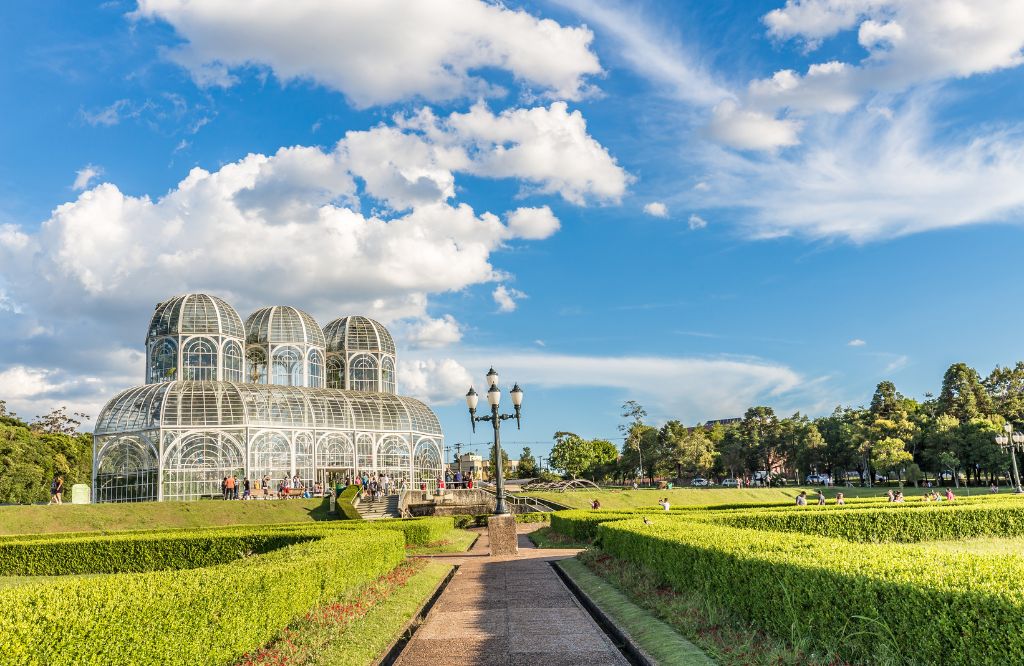
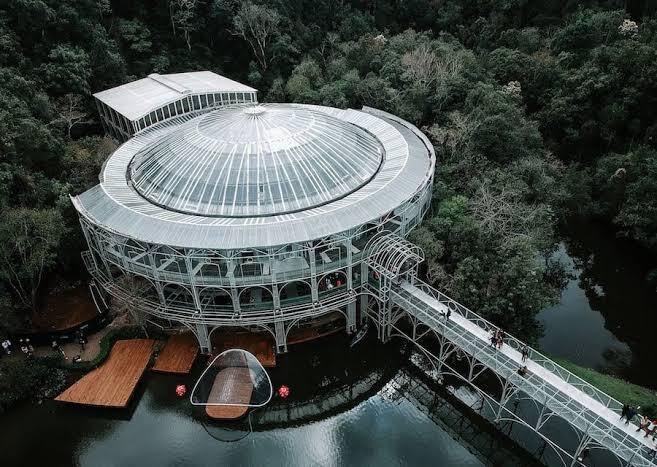
For the tourist, the practical advice is simple: Curitiba’s main attractions, such as the Botanical Garden, the Oscar Niemeyer Museum, the Wire Opera House, the German Woods, and the historic center, are all in lower-risk regions. The visitor who follows the conventional tourist itinerary will hardly need to pass through these areas.
The use of transport apps for nighttime commutes and avoiding walking through unfamiliar regions after dark are the most relevant precautions for any tourist in Curitiba.
Is Curitiba safe for tourists? What to expect during the visit
Curitiba is safe for tourists who visit the city’s main spots and adopt the basic precautions recommended for any Brazilian metropolis. The capital of Paraná has a well-developed tourist infrastructure and most of the attractions are in low-risk areas.
Main tourist spots and the level of security at each one
Curitiba’s most visited attractions are in well-monitored areas with good access infrastructure. Check out what to expect at each one:
- Botanical Garden: open area, well-lit, and with the presence of guards. Avoid visiting after dusk.
- Oscar Niemeyer Museum (MON): located in a prime area, with security in the surroundings and monitored parking.
- Wire Opera House: controlled environment and well-rated by visitors in terms of security.
- German Woods: wooded area in the Ahú neighborhood; quiet during the day, it is recommended to avoid at night.
- Historic Center and Largo da Ordem: busy during the day, especially on weekends with the Largo Fair. At night, the flow decreases and more attention is needed.
- Rua XV de Novembro (Pedestrian Street): one of the busiest streets in the city, with a good presence of policing.
Brasil ATM’s recommendation is to visit tourist spots during the day, especially open spaces. For nighttime visits to restaurants, theaters, and bars, Batel, Bigorrilho, and Água Verde are the neighborhoods with the most suitable and safe environment.
Is public transport in Curitiba safe for those visiting the city?
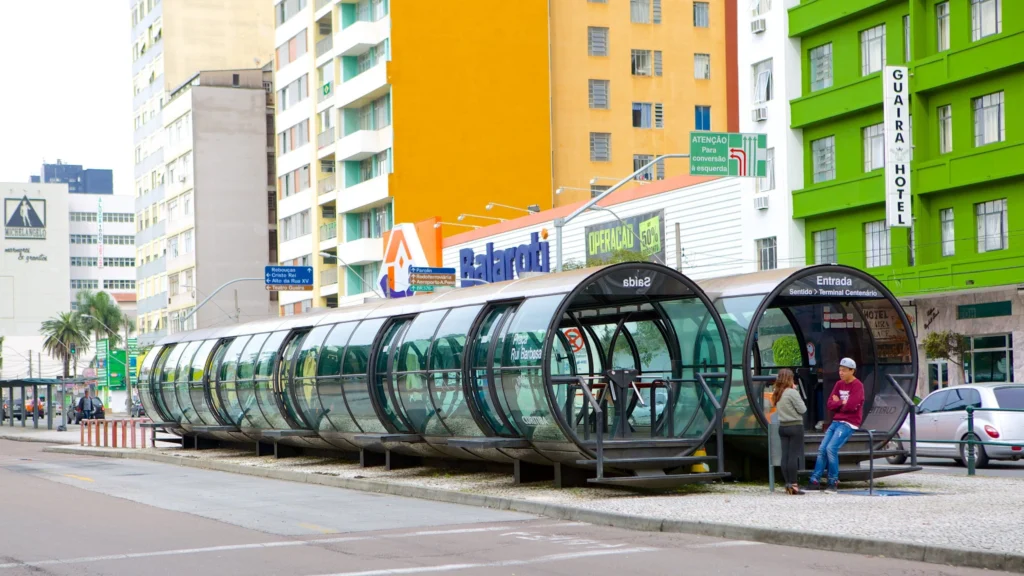
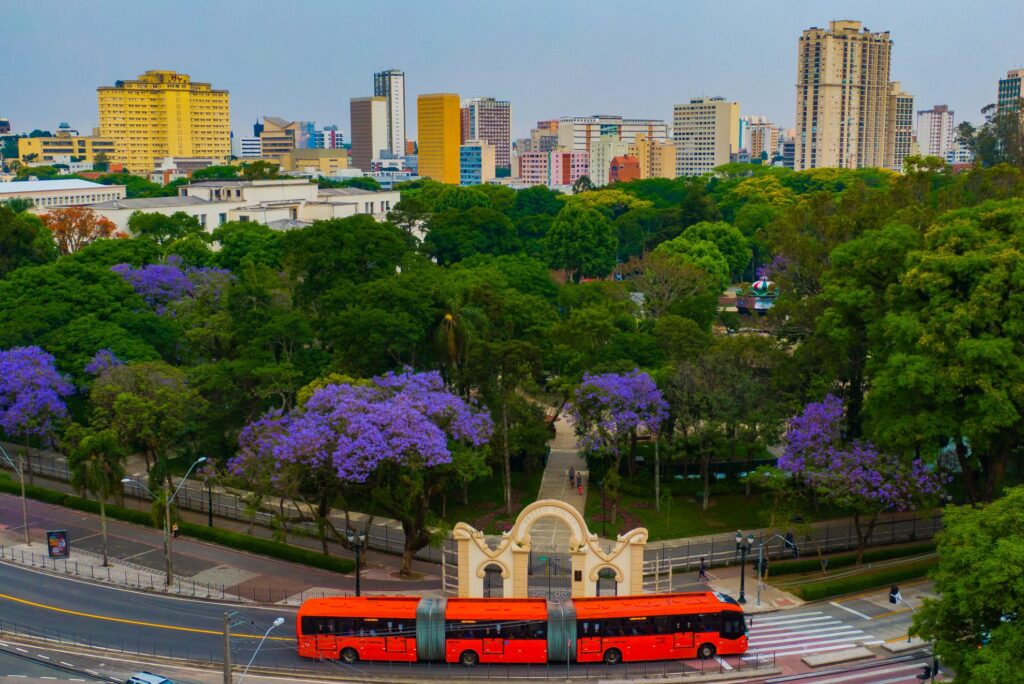
Curitiba’s public transport, with its integrated system of Biarticulated buses and boarding tubes, is considered one of the most organized in Brazil and offers a reasonable level of security by national standards, especially on the lines that serve the central and tourist regions.
Curitiba’s BRT system, managed by URBS, operates with turnstiles at the tube stations, which reduces the entry of people without tickets and contributes to a more controlled environment inside the vehicles. The lines that connect the main tourist spots pass through busy and well-monitored corridors.
For peak hours at night or trips to more distant regions, private transport apps are a more comfortable and safer alternative. Prices are usually affordable within the city, and the waiting time is generally short in central areas.
Practical security tips to enjoy Curitiba without worries
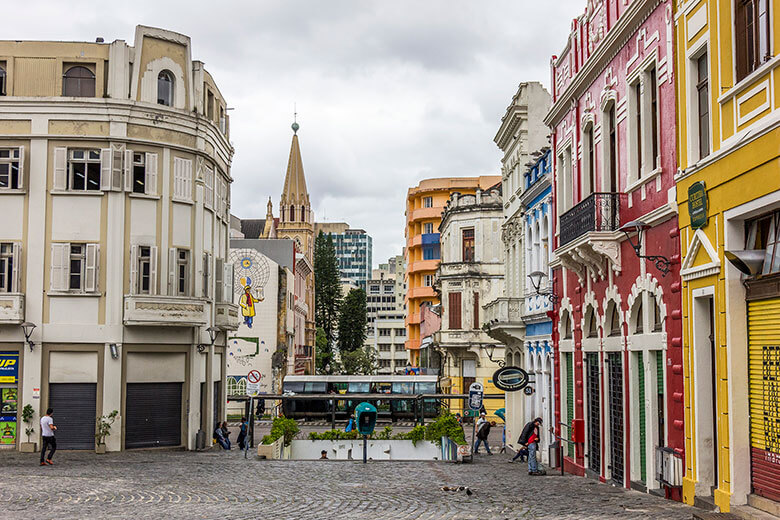
With simple planning, most tourists pass through Curitiba without any type of incident. The guidelines below reflect what the Brasil ATM team identified as the most relevant precautions for those visiting the city for the first time.
Essential precautions during the tour: documents, belongings, and commutes
Adopting good security practices during the tour significantly reduces the risk of incidents. The main precautions are:
- Leave original documents at the hotel and circulate with printed copies or photos on your cell phone.
- Avoid displaying high-value cell phones in crowded places, especially in the historic center.
- Prefer bags and backpacks with front closures or that you can hold in front of your body.
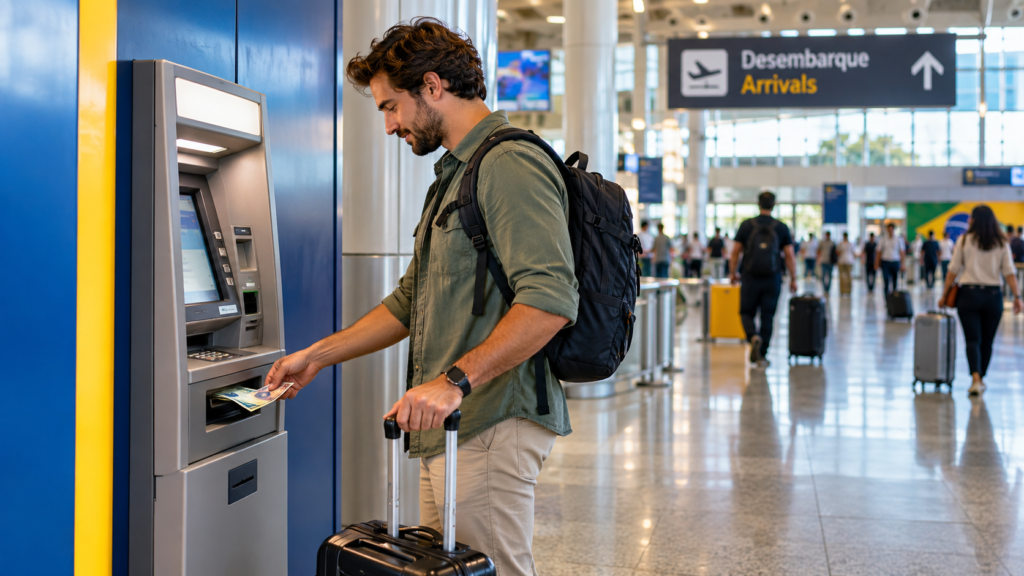
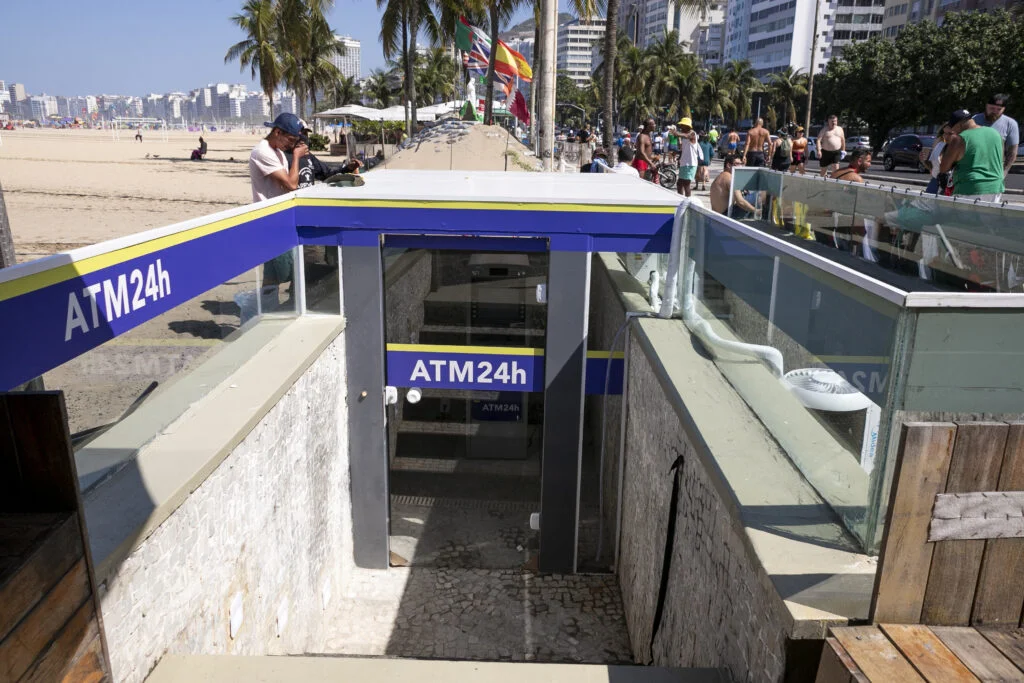
- Use ATMs inside establishments or shopping malls, not at street equipment.
- For nighttime commutes, prioritize transport apps over street taxis.
- Do not accept help from strangers to operate ATMs.
- Keep your cell phone charged and the emergency number saved.
These precautions are not exclusive to Curitiba, but they make a difference in any large Brazilian city. The goal is to reduce exposure to opportunities for theft, which is the most common type of incident in tourist environments.
What emergency apps and services should the tourist have on their cell phone in Curitiba?
The main emergency numbers in Curitiba are the same as in the rest of Brazil: 190 for the Military Police, 192 for SAMU (Mobile Emergency Care Service), and 193 for the Fire Department. Having these contacts saved and a transport app installed solves most urgent situations.
In addition to emergency numbers, the following resources are useful during the visit:
- Transport apps (Uber, 99): indispensable for nighttime commutes and in unfamiliar areas.
- Google Maps offline: download the map of Curitiba in advance to navigate without the internet.
- URBS App: shows routes and schedules for Curitiba’s public transport.
- Paraná Disque Denúncia (181): anonymous channel to report suspicious situations.
Brasil ATM works to keep its content always updated and accurate. Even so, information such as opening hours of attractions, transport fares, and visitation rules can be changed without prior notice. We always recommend checking official channels before traveling.
Curitiba as a model city: urbanism, organization, and quality of life that reinforce security
Curitiba’s urban planning is frequently cited as one of the main factors that differentiate the city in the Brazilian context. This structure has a direct impact on public security and the quality of life of residents and visitors.
How Curitiba’s urban planning contributes to the feeling of security
Curitiba was a pioneer in Brazil in integrated transport systems, the creation of urban parks, and land use planning. These policies, initiated during Jaime Lerner’s administration in the 1970s and 1980s, created a city with less irregular occupation, better distribution of public services, and a more legible and safer urban grid.
Well-lit streets, paved sidewalks in a large part of the city, parks distributed throughout the neighborhoods, and a transport system with closed stations are elements that, together, reduce points of urban vulnerability and increase the feeling of control over public space.
The city also invests in monitoring technology. Curitiba’s Integrated Control Center concentrates cameras and incident response systems, which allows for faster action in emergency situations. This set of initiatives does not eliminate security problems, but it positions Curitiba at an advantage compared to capitals that have not made the same structural investments.
Is it worth living in Curitiba? Security, cost of living, and well-being in perspective
Living in Curitiba is worth it for those who prioritize quality of life, urban infrastructure, and a level of security above the average for large Brazilian cities. The capital of Paraná combines job offers, quality education, and relatively well-structured public services.
Is Curitiba safe for families, the elderly, and women traveling alone?
Curitiba offers a reasonably safe environment for families with children, the elderly, and women traveling alone, especially in the central and northern regions of the city. The main tourist spots are accessible, well-signposted, and have a monitoring presence.
For families, Curitiba’s parks, such as Barigui Park and the Botanical Garden, are spacious, well-structured, and safe options during the day. The transport system is adapted for reduced mobility in most stations.
Women traveling alone generally report a greater feeling of comfort in Curitiba than in cities like Rio de Janeiro or São Paulo, especially regarding walking in central regions during the day.
For the nighttime period, the same recommendations applied to any large city apply: prefer transport apps and avoid deserted streets.
The elderly should observe the sidewalks, which in some neighborhoods still have irregularities, and plan routes with adapted access at tourist spots. The City Hall of Curitiba provides information on accessibility at the city’s main cultural facilities.
Quick comparison: Curitiba vs other Brazilian capitals in security and quality of life
To contextualize Curitiba’s position in the national scenario, the table below gathers information based on quality of life rankings and data from the Brazilian Yearbook of Public Security:
| Capital | Homicide rate (reference) | Quality of life (ranking) | Perception of security |
|---|---|---|---|
| Curitiba | Below national average | Among the top 3 in BR | High (central neighborhoods) |
| Florianópolis | Low | High | High |
| Porto Alegre | Medium | Medium-high | Medium |
| São Paulo | Medium-high | Medium | Medium |
| Rio de Janeiro | High | Medium | Low-medium |
| Fortaleza | High | Medium-low | Low |
Curitiba consistently appears among the capitals with the best performance in security and quality of life. Florianópolis is its main competitor in this ranking, but Curitiba has the advantage in the offer of urban services, economic diversity, and transport infrastructure.
The cost of living in Curitiba is lower than in São Paulo and Rio de Janeiro for housing and food, but the city has harsh winters, with temperatures that can reach close to zero degrees. This climatic factor directly influences the planning of visits and housing.
After all, is Curitiba safe?
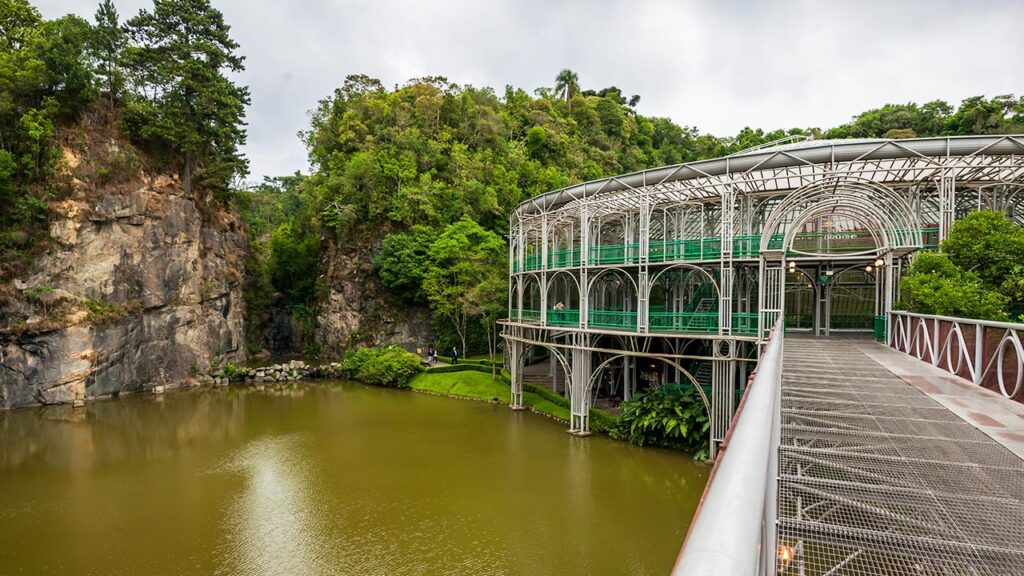
Curitiba is safe for those visiting or living in the city, especially when compared to the scenario of Brazilian capitals. Official data, recognition in quality of life rankings, and consolidated urban infrastructure position the city as one of the most suitable for tourists and residents who value tranquility and organization.
With the information gathered here, you have what you need to plan your visit consciously: the safest neighborhoods, points of attention, practical tips, and an honest comparison with other capitals. Continue browsing Brasil ATM to discover itineraries, attractions, gastronomy, and everything Curitiba has to offer. And when you are ready to book, find well-located accommodation through Booking or explore tours and experiences organized by GetYourGuide.
Where to withdraw money at ATM24h cash machines in Brazil
To make the most of your itinerary through Curitiba, it is best to carry cash. This guarantees a smooth and incredible experience. In some places, cash is essential for food, transport, tickets to attractions, and more.
Check the table below with some 24h ATM machines in the regions mentioned in this article:
| Where | Location |
|---|---|
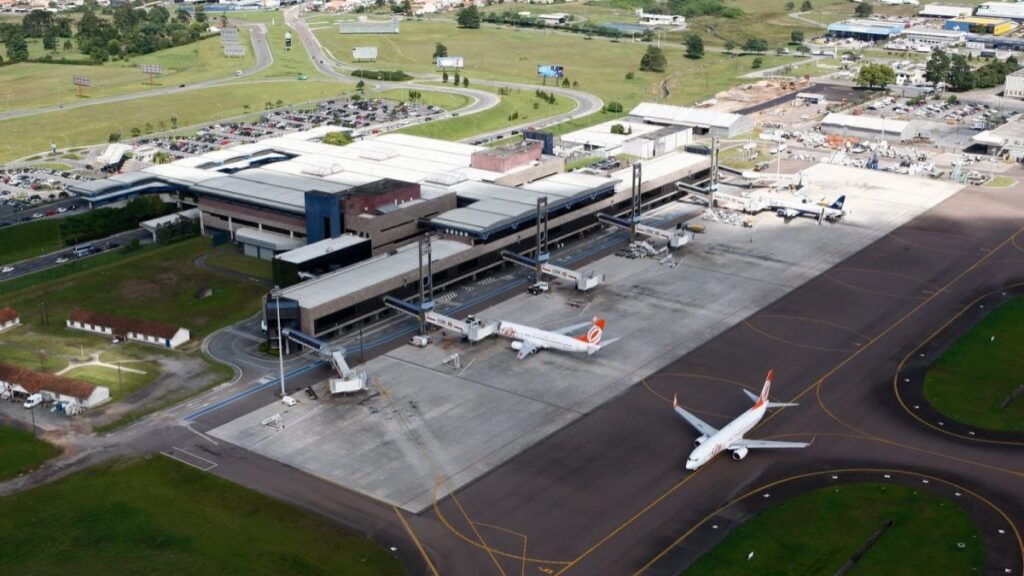
| Afonso Pena International Airport | See all points here |
| Jockey Plaza Shopping Center | See all points here |
| Pestana Curitiba | See all points here |
| NH Curitiba The Five | See all points here |
Discover Brasil ATM
At Brasil ATM, we see Brazil as a place full of unique beauties and fascinating culture. Our portal, supported by the global brand ATM24h, reflects our love for Brazil. Our goal is to inspire tourists to explore its wonders safely and informedly.
We provide accurate, updated, and inspiring information in three languages. With us, you will have everything you need to plan your trip with confidence. We offer travel guides, detailed itineraries, and useful planning tips.
We want to create memories that last. We will show you the natural and cultural beauty of Brazil. Explore famous destinations like Rio de Janeiro and São Paulo, and discover hidden gems like Lençóis Maranhenses and Fernando de Noronha. We are here to help you make the most of your trip.

You might also like to read:
- Best restaurants in Brasília: 15 options to eat well in the federal capital
- 5-star hotels in Brasília: Discover the best luxury options in Brazil’s capital
- 4-Star Hotels in Brasília: where to stay with comfort and excellent value for money
- 3-Star Hotels in Brasília: where to stay with comfort and great value for money in the capital
Frequently Asked Questions
Yes. For visitors who follow conventional tourist itineraries and adopt basic precautions, Curitiba offers a relatively peaceful environment. The main tourist spots are in well-monitored areas with good access infrastructure.
Batel, Água Verde, Bigorrilho, Juvevê, Boa Vista, and Ahú are the most recommended neighborhoods for accommodation, as they combine security, access to transport, and a good range of services. You can compare options in these neighborhoods through Booking.
In the regions of Batel, Água Verde, and Bigorrilho, where restaurants, bars, and theaters are concentrated, nighttime movement is safe for most visitor profiles. In more distant regions or in the historic center after businesses close, it is recommended to use transport apps.
Curitiba’s integrated Biarticulated system is one of the most organized in Brazil and offers a reasonable level of security on the lines that serve the central and tourist regions. For nighttime hours or peripheral areas, private transport apps are the most recommended option.
Curitiba offers more favorable conditions for women traveling alone compared to capitals like Rio de Janeiro and São Paulo, especially in central regions during the day. For nighttime commutes, it is recommended to use transport apps and avoid deserted streets.
The numbers are the same as in the rest of Brazil: 190 (Military Police), 192 (SAMU), and 193 (Fire Department). The Paraná Disque Denúncia works through the number 181, anonymously.